
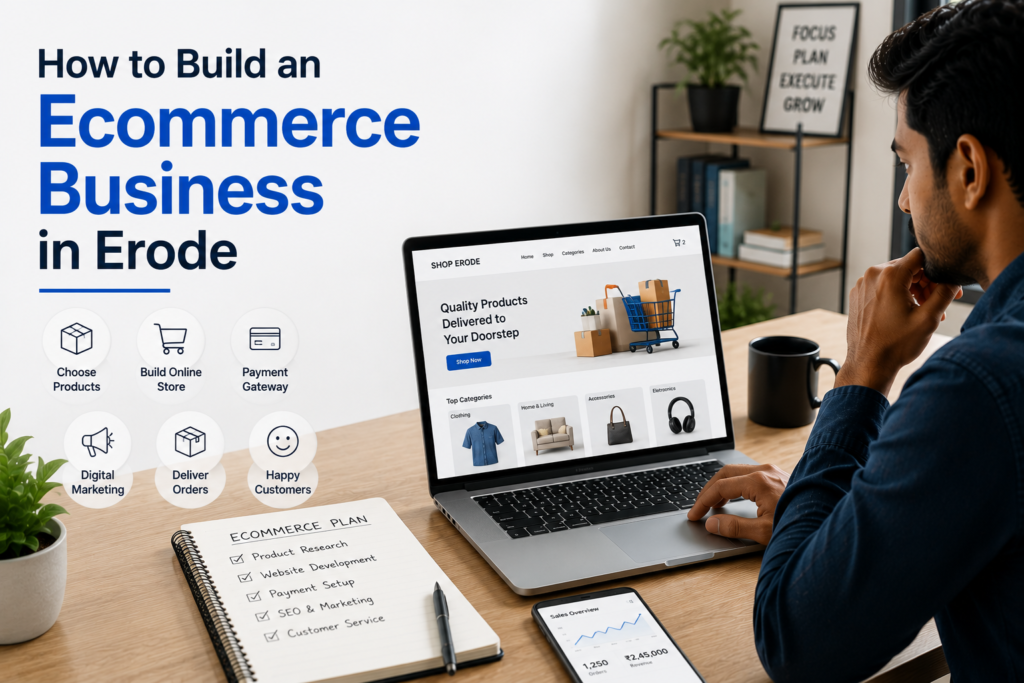
Ecommerce has changed the way people shop. Customers now prefer comparing products online, reading reviews, checking prices, and placing orders from their mobile phones or computers. For businesses in Erode, this creates an excellent opportunity to reach customers not only within the city but across Tamil Nadu and throughout India.
Whether you manufacture textiles, sell garments, home décor, groceries, electronics, gifts, furniture, beauty products, or handmade items, an ecommerce business allows you to sell around the clock without depending solely on a physical store.
Building an ecommerce business involves more than creating an online store. Success comes from understanding your customers, choosing the right platform, providing a secure shopping experience, optimizing for search engines, and consistently improving your marketing.
This guide explains each step in detail to help you build a strong ecommerce business in Erode.
Why Start an Ecommerce Business in Erode?
Erode has a strong business ecosystem with industries such as textiles, turmeric, agriculture, retail, manufacturing, and wholesale trade. As internet usage and digital payments continue to grow, more customers are comfortable shopping online.
An ecommerce business offers several advantages:
- Sell products 24/7
- Reach customers beyond your local area
- Reduce dependency on walk-in sales
- Accept online payments securely
- Track inventory digitally
- Build your own brand
- Increase revenue through online marketing
Even small businesses can compete effectively with larger brands when they provide a great customer experience.
Step 1: Choose the Right Products
Every successful ecommerce business begins with choosing products that customers actually want.
Ask yourself:
- Is there demand for this product?
- Can I offer something unique?
- Can I price it competitively?
- Can I deliver it safely?
Popular ecommerce categories include:
- Textile products
- Clothing and fashion
- Home décor
- Kitchen products
- Gift items
- Beauty products
- Electronics accessories
- Handmade products
- Organic food products
- Industrial supplies
Research competitors before investing in inventory.
Step 2: Understand Your Target Customers
Instead of trying to sell to everyone, define your ideal customer.
Consider:
- Age
- Location
- Interests
- Budget
- Shopping habits
- Problems your product solves
Understanding your audience helps improve product descriptions, advertisements, and website design.
Step 3: Create a Professional Ecommerce Website
Your ecommerce website is your digital storefront.
A professional online store should include:
- Home page
- Product categories
- Individual product pages
- Shopping cart
- Secure checkout
- Customer account
- Order tracking
- Contact page
- About page
- FAQ section
- Blog
The website should be:
- Mobile responsive
- Fast loading
- Secure (HTTPS)
- SEO optimized
- Easy to navigate
Platforms like Shopify, WooCommerce, or custom ecommerce solutions can all work depending on your business needs.
Step 4: Write High-Quality Product Pages
Product pages are where customers make buying decisions.
Each product should include:
- Clear product title
- Detailed description
- High-quality images
- Product specifications
- Benefits
- Pricing
- Availability
- Customer reviews
- Shipping information
Avoid copying descriptions from other websites. Write original content that answers customer questions.
Step 5: Set Up Secure Payment Options
Customers expect a safe and simple checkout process.
Popular payment options include:
- UPI
- Credit Cards
- Debit Cards
- Net Banking
- Wallet Payments
- Cash on Delivery (if suitable)
A secure payment gateway increases customer confidence.
Step 6: Plan Shipping and Delivery
Fast and reliable delivery is essential for ecommerce success.
Consider:
- Packaging quality
- Courier partners
- Delivery timelines
- Return policy
- Order tracking
- Shipping charges
Clear communication about shipping builds customer trust.
Step 7: Optimize Your Ecommerce Website for SEO
SEO helps your products appear in Google Search when customers are looking to buy.
Use keywords naturally in:
- Product titles
- Product descriptions
- Category pages
- Blog articles
- Meta titles
- Meta descriptions
- Image ALT text
Examples of useful keywords:
- Buy Textile Products Online
- Ecommerce Website Development in Erode
- Online Shopping in Erode
- Handmade Gifts Online
- Organic Products in Erode
SEO provides sustainable traffic without paying for every visitor.
Step 8: Create Helpful Blog Content
Many ecommerce businesses focus only on product pages.
Adding educational blog content can improve both SEO and customer trust.
Examples:
- How to Choose the Right Product
- Buying Guide
- Product Care Tips
- Industry Trends
- Frequently Asked Questions
Helpful content attracts visitors earlier in their buying journey.
Step 9: Use Social Media to Showcase Products
Social media is an excellent way to increase product awareness.
Share:
- Product photos
- Short videos
- Customer reviews
- Packaging process
- New arrivals
- Special offers
- Behind-the-scenes content
Link every post back to your ecommerce website.
Step 10: Run Google Ads and Social Media Ads
Paid advertising helps reach customers quickly.
Popular campaigns include:
- Google Shopping Ads
- Search Ads
- Performance Max
- Facebook Ads
- Instagram Ads
Focus on targeting customers who are actively searching for your products.
Step 11: Build Customer Trust
Trust plays a major role in online shopping.
Include:
- Customer reviews
- Secure payment badges
- Return policy
- Shipping information
- Contact details
- Business address
- Frequently Asked Questions
These elements reduce hesitation and improve conversion rates.
Step 12: Improve Website Speed
Customers expect websites to load quickly.
Improve performance by:
- Compressing images
- Using modern image formats
- Choosing reliable hosting
- Optimizing code
- Reducing unnecessary plugins
Fast websites provide a better shopping experience and support SEO.
Step 13: Measure Your Performance
Successful ecommerce businesses constantly monitor their performance.
Track:
- Website visitors
- Sales
- Conversion rate
- Average order value
- Best-selling products
- Cart abandonment
- Customer retention
Useful tools include:
- Google Analytics
- Google Search Console
- Ecommerce platform reports
Common Ecommerce Mistakes
Avoid these common problems:
- Poor product images
- Slow website
- Weak product descriptions
- Complicated checkout
- No SEO strategy
- No customer reviews
- Ignoring mobile users
- Inconsistent pricing
- Poor customer support
Small improvements in these areas often lead to better sales.
Ecommerce Checklist
Before launching your store, confirm that you have:
✅ Professional website
✅ Secure payment gateway
✅ Mobile-friendly design
✅ SEO optimization
✅ Product descriptions
✅ High-quality images
✅ Shipping policy
✅ Return policy
✅ Customer reviews
✅ Analytics setup
Businesses That Can Benefit from Ecommerce
Ecommerce works well for:
- Textile manufacturers
- Fashion brands
- Gift stores
- Furniture shops
- Electronics stores
- Grocery businesses
- Beauty brands
- Home décor companies
- Handmade products
- Organic food businesses
Frequently Asked Questions
Can small businesses start an ecommerce website?
Yes. Even small businesses can successfully sell products online with a well-designed ecommerce website and consistent marketing.
Which platform is best for ecommerce?
The right platform depends on your business size and goals. Shopify, WooCommerce, and custom ecommerce solutions are all popular options.
How can I get traffic to my ecommerce website?
Use a combination of SEO, helpful blog content, Google Ads, social media marketing, email marketing, and customer referrals.
How important is SEO for ecommerce?
SEO is one of the most valuable long-term marketing strategies because it helps customers find your products through search engines without paying for every click.
How long does it take to build an ecommerce business?
Building a successful ecommerce business takes time. Consistent improvements to your website, marketing, customer service, and product range help create sustainable growth.
Conclusion
Building an ecommerce business in Erode is an excellent opportunity for businesses that want to expand beyond traditional retail and reach a wider audience.
Success comes from much more than simply launching an online store. A professional ecommerce website, high-quality product information, secure payments, fast delivery, local and national SEO, helpful content, and consistent marketing all contribute to long-term growth.
By focusing on customer experience, providing useful information, and continuously improving your online store, you can build a trusted ecommerce brand that generates sales and supports your business for years to come.