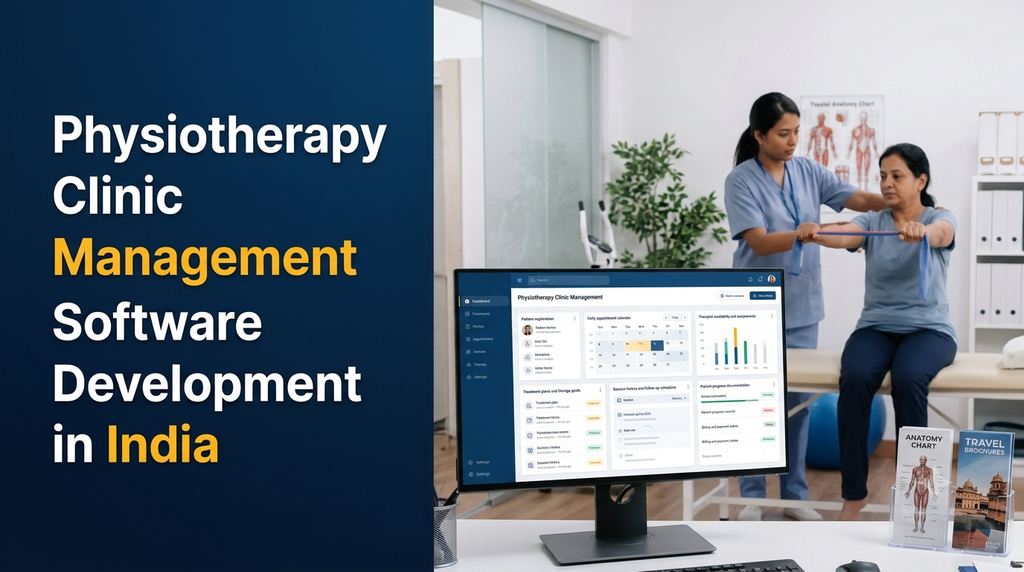
Physiotherapy clinic management software is a digital platform that helps physiotherapy practices manage patient registration, appointments, therapist schedules, treatment plans, therapy sessions, progress records, billing and clinic operations. It brings administrative and patient-management activities into one organised system.
Physiotherapy clinics often handle recurring appointments, multiple treatment sessions and different rehabilitation programmes. Managing these activities through paper registers or disconnected spreadsheets can make it difficult to maintain consistent patient histories and schedules. A purpose-built software solution helps clinics coordinate these workflows more efficiently.
In India, physiotherapy clinic management software can be developed as a web application, mobile application or complete platform with separate interfaces for administrators, physiotherapists, reception staff and patients.
What Is Physiotherapy Clinic Management Software?
Physiotherapy clinic management software is designed to support the administrative and documentation workflows of physical therapy and rehabilitation practices.
It provides a centralised place to maintain patient profiles, schedule consultations, assign physiotherapists, organise treatment sessions and record authorised progress notes.
Depending on the clinic’s requirements, the system may also include:
- Patient registration and appointment management
- Physiotherapist profiles and availability
- Initial assessment documentation
- Rehabilitation plans and therapy goals
- Exercise programme records
- Session attendance and history
- Follow-up scheduling and reminders
- Billing, receipts and package management
- Patient progress reports
- Clinic administration and financial dashboards
Why Do Physiotherapy Clinics Need Management Software?
Physiotherapy services frequently involve a series of appointments rather than a single consultation. A patient may attend multiple sessions with the same therapist or receive services from different professionals depending on the clinic’s treatment arrangements.
Without a centralised system, reception staff may need to check separate registers for appointments, payments and patient history. Physiotherapists may maintain session notes separately, while administrators prepare financial reports manually.
A connected management system can help clinics:
- Maintain organised patient profiles and visit history.
- Schedule appointments and recurring therapy sessions.
- Manage physiotherapist availability and assignments.
- Record treatment plans and authorised session notes.
- Track attendance and follow-up requirements.
- Manage therapy packages and payment records.
- Reduce duplicate administrative data entry.
- Prepare clinic performance and collection reports.
- Provide approved appointment information to patients.
Types of Physiotherapy and Rehabilitation Centres That Can Use the Software
1. General Physiotherapy Clinics
General physiotherapy practices can use the platform for patient registration, therapist schedules, consultation appointments, session documentation and billing.
2. Orthopaedic Physiotherapy Centres
Clinics providing orthopaedic rehabilitation services can organise assessment records, treatment sessions, follow-up schedules and relevant progress documentation.
3. Sports Physiotherapy Clinics
Sports physiotherapy practices can maintain athlete profiles, appointment history, rehabilitation session records and approved return-to-activity documentation.
4. Neuro Rehabilitation Centres
Neuro rehabilitation providers can organise patient appointments, therapist assignments, assessment documentation, session records and authorised care plans.
5. Paediatric Physiotherapy Centres
Paediatric physiotherapy practices can manage patient profiles, parent or guardian contacts, recurring appointments and access-controlled therapy documentation.
6. Multi-Branch Physiotherapy Organisations
Organisations operating multiple clinics may require centralised patient management, branch-wise therapist schedules, service pricing and consolidated financial reporting.
Essential Features of Physiotherapy Clinic Management Software
1. Patient Registration and Profile Management
Patient management is the foundation of a physiotherapy clinic application. It helps staff create and maintain a consistent record for each patient.
Patient profiles may include:
- Patient name and unique patient ID
- Contact details and date of registration
- Emergency contact information where required
- Referral source and referring professional, if applicable
- Appointment and visit history
- Relevant assessment documents
- Authorised treatment and progress records
- Billing and payment history
The application should support patient search and duplicate-record checks. Sensitive clinical information must only be accessible to authorised users.
2. Appointment Scheduling and Calendar
Appointment management helps reception teams coordinate consultations and recurring therapy sessions.
Useful scheduling features include:
- Daily, weekly and monthly calendar views
- Therapist-wise appointment schedules
- Available session time slots
- Recurring appointment creation
- Appointment confirmation and reminders
- Rescheduling and cancellation records
- Waiting-list management
- Conflict detection for therapists and rooms
The system can also support different appointment types, such as initial assessment, regular therapy session, review consultation and follow-up.
3. Physiotherapist and Staff Management
A physiotherapy clinic may have several therapists with different working hours, service areas and professional responsibilities. A staff management module helps administrators organise these resources.
- Physiotherapist profiles
- Professional qualifications and registration details, where applicable
- Speciality and service categories
- Working hours and shift schedules
- Leave and availability management
- Patient and session assignments
- Staff attendance records
- Therapist-wise appointment reports
4. Patient Assessment and Clinical Documentation
An assessment module allows authorised physiotherapists to document information relevant to a patient’s evaluation and rehabilitation programme.
Depending on the clinic’s clinical workflow, records may include:
- Initial assessment date
- Presenting concerns and relevant history
- Functional assessment notes
- Range of motion observations
- Strength and mobility assessment records
- Relevant pain assessment information
- Functional goals and review dates
- Progress notes and assessment history
Assessment templates should be configurable and reviewed by qualified physiotherapists. The software should record the author and date of clinical entries and preserve an appropriate history of changes.
5. Treatment Plan and Rehabilitation Programme Management
A treatment plan module helps authorised professionals document the rehabilitation programme selected for a patient.
Possible features include:
- Patient-specific rehabilitation plans
- Therapy goals and review dates
- Exercise programme references
- Session frequency and duration
- Assigned physiotherapist
- Approved instructions and precautions
- Plan revision history
- Follow-up and reassessment records
The software should support documentation and workflow management, not independently diagnose conditions or recommend exercises without professional oversight.
6. Therapy Session Management
Clinics need a clear record of every scheduled and completed therapy session. A session management module can connect the appointment with its relevant treatment documentation.
Each session may contain:
- Patient and therapist reference
- Session date and scheduled duration
- Attendance status
- Session category
- Authorised treatment notes
- Exercise programme references
- Patient-reported feedback where recorded
- Next appointment and review date
7. Exercise Library and Programme Records
An exercise library can help a clinic organise approved exercise references used by its physiotherapists.
It may include:
- Exercise name and category
- Illustrations or approved demonstration videos
- Relevant instructions
- Professional guidance and precautions
- Programme assignment history
- Patient-specific exercise references
Exercise selection, intensity, frequency and progression should be determined by the treating professional. A general exercise library should not automatically be treated as a personalised treatment recommendation.
8. Patient Progress Tracking
Progress documentation helps physiotherapists review information recorded across multiple sessions.
Depending on the assessment method, the system can support:
- Assessment history over time
- Therapy goal review
- Functional assessment records
- Range of motion observations
- Session attendance history
- Therapist progress notes
- Review and reassessment dates
Dashboards can display authorised trends and historical records. They should not present a numerical change as proof of clinical improvement without appropriate professional interpretation.
9. Billing, Packages and Payment Management
Physiotherapy clinics may charge per consultation, per session, or through a predefined package. Billing software can connect these charges with patient appointments and completed sessions.
Useful features include:
- Consultation and assessment charges
- Individual therapy session pricing
- Multi-session package management
- Package validity and remaining session records
- Invoice and receipt generation
- Partial payments and outstanding balances
- Discount and adjustment history
- Refund and cancellation records
- Cash, UPI, card and supported online payment records
10. Notifications and Patient Reminders
Appointment reminders can help patients and staff stay informed about scheduled visits.
- Upcoming appointment reminders
- Appointment confirmation messages
- Schedule changes and cancellation alerts
- Follow-up reminders
- Package or payment notifications
- Clinic announcements
SMS, email and WhatsApp notifications can be connected through supported service providers. Messages should not expose sensitive clinical details unnecessarily.
11. Patient Portal
A patient portal can allow patients to access selected clinic services without contacting reception for every administrative request.
- View and request appointments
- Check upcoming session schedules
- View authorised therapist information
- Access approved exercise materials
- Review invoices and receipts
- Submit appointment-related requests
- Update permitted contact information
12. Admin Dashboard and Reports
A central dashboard helps clinic owners and administrators review day-to-day operations.
- Total registered patients
- Today’s appointments and completed sessions
- Upcoming and cancelled appointments
- Therapist-wise schedules
- Patient attendance reports
- Session package utilisation
- Daily and monthly collection summaries
- Outstanding payment reports
- Branch-wise performance reports
Important Modules in a Physiotherapy Management System
| Module | Main purpose |
|---|---|
| Super Admin | Manage system settings, branches, users and permissions. |
| Patient Management | Maintain patient profiles, contacts and visit history. |
| Appointment Management | Schedule consultations and recurring therapy sessions. |
| Therapist Management | Manage physiotherapist profiles, shifts and availability. |
| Assessment Management | Record authorised patient assessments and clinical notes. |
| Treatment Plan Management | Document rehabilitation goals and approved treatment plans. |
| Session Management | Track attendance, session history and visit documentation. |
| Exercise Library | Organise approved exercise references and programme materials. |
| Billing and Payments | Manage consultation fees, packages, invoices and receipts. |
| Patient Portal | Provide access to permitted appointments and patient services. |
| Reports and Analytics | Review clinic activity, attendance and financial summaries. |
How Physiotherapy Clinic Management Software Works
A typical patient journey through an integrated physiotherapy management system can follow these stages:
- Patient enquiry: The clinic receives an appointment request through a phone call, website or other channel.
- Patient registration: Reception staff create a new profile or retrieve an existing patient record.
- Initial appointment: The patient is assigned an appointment with an available physiotherapist.
- Assessment documentation: The authorised physiotherapist records relevant assessment information.
- Plan documentation: The professional records the agreed rehabilitation goals and treatment plan.
- Session scheduling: Future therapy sessions are arranged according to the clinic’s workflow.
- Session recording: Attendance and authorised session notes are documented.
- Billing: The system records applicable consultation, session or package charges.
- Progress review: The physiotherapist reviews previous documentation and updates the plan when clinically appropriate.
- Follow-up: The clinic schedules the next review or records the completion of the service plan.
Example: Physiotherapy Session Package Management
A clinic can configure session packages to manage prepaid services and track the sessions used by each patient. The following is a fictional software example, not a recommended treatment schedule or market price.
| Package record | Illustrative value |
|---|---|
| Package name | Therapy Session Package A |
| Included sessions | 10 |
| Sessions completed | 4 |
| Sessions remaining | 6 |
| Package amount | ₹5,000 |
| Amount received | ₹5,000 |
| Payment status | Paid |
The software should maintain session usage history and apply package rules configured by the clinic. Any cancellation, rescheduling, expiry or refund policy should be clearly documented and reflected in the billing workflow.
Web Application and Mobile App Requirements
A physiotherapy management platform can use separate interfaces for administrators, therapists and patients. Each interface should expose only the information and functions needed by that user.
Admin Web Application
- Patient and therapist management
- Appointment calendar and session allocation
- Assessment and treatment documentation access controls
- Billing, packages and payment management
- Staff and branch management
- Reports and dashboard configuration
Physiotherapist Mobile Application
- Secure staff login
- Daily appointment schedule
- Assigned patient information
- Authorised assessment and session notes
- Session completion status
- Approved exercise programme references
- Follow-up and schedule notifications
Patient Mobile App or Portal
- Appointment booking and requests
- Upcoming therapy schedule
- Approved exercise resources
- Invoice and receipt history
- Appointment reminders
- Clinic contact and support information
Advanced Features for Growing Physiotherapy Clinics
1. Multi-Branch Management
A multi-branch system can support centralised administration with separate patient lists, therapist schedules, service pricing and reports for each clinic location.
2. Online Appointment Booking
Patients can request appointments through a website or portal. The system can display available slots based on configured therapist schedules and clinic booking rules.
3. Referral and Doctor Management
Clinics can record referring doctors, referral sources and related patient enquiries. Reports can help administrators understand where patient enquiries originate.
4. Equipment and Resource Scheduling
Clinics that use shared treatment rooms or equipment can add resource scheduling to avoid overlapping bookings. This may include treatment rooms, rehabilitation equipment and other shared facilities.
5. Video Consultation Integration
Where appropriate for the service and professional requirements, clinics can connect a supported video consultation service for remote follow-ups. Remote sessions should follow suitable privacy, consent and clinical practice requirements.
6. Data Export and Integration
A custom application can connect with supported accounting, payment, messaging or other healthcare applications. Data exports should follow defined access permissions and avoid unnecessary disclosure of clinical information.
Security and Patient Data Protection
Physiotherapy applications may store personal information, clinical assessments, treatment notes, appointments and payment records. Protecting this information is essential for a trustworthy clinic management platform.
Important safeguards include:
- Role-based access: Provide different permissions for administrators, receptionists, physiotherapists and patients.
- Secure authentication: Use appropriate login and session controls.
- Encryption: Protect data in transit and apply suitable protection to stored records.
- Audit trails: Record access and important changes to clinical and administrative records.
- Data minimisation: Collect only the information required for the clinic’s operations and care documentation.
- Secure file storage: Restrict access to assessment documents and uploaded records.
- Backup and recovery: Maintain backups and test restoration procedures.
- Mobile security: Protect patient information accessed through therapist devices.
- Consent and permissions: Define appropriate processes for collecting and using patient information.
Clinics should assess their obligations under applicable Indian data protection laws, professional requirements and contractual arrangements. The software itself does not automatically guarantee legal or clinical compliance.
Physiotherapy Clinic Management Software Development Cost in India
The cost of developing physiotherapy clinic management software depends on the modules, number of users, assessment workflows, mobile application requirements, integrations, reporting and security needs.
The following figures are illustrative custom-development planning estimates, not fixed Greap quotations or guaranteed market prices.
| Development scope | Illustrative estimate |
|---|---|
| Basic patient and appointment management | ₹25,000–₹45,000 |
| Patient, therapist and session management | ₹40,000–₹70,000 |
| Assessment, treatment plan and progress records | ₹55,000–₹95,000 |
| Complete clinic system with billing and reports | ₹70,000–₹1.3 lakh |
| Advanced platform with therapist mobile application | ₹1.2–₹2.5 lakh+ |
| Patient portal, mobile applications and integrations | ₹2–₹4 lakh+ |
| Multi-branch or advanced rehabilitation platform | ₹3.5–₹7 lakh+ |
Additional costs may include:
- Domain and cloud hosting
- Database and secure document storage
- SMS, email and messaging service charges
- Payment gateway fees
- Video consultation provider charges
- Maps and third-party API usage
- Mobile app publishing requirements
- Data migration and security assessment
- Taxes, maintenance and ongoing support
How to Choose a Physiotherapy Software Development Company
The development partner should understand both clinic administration and the need for careful clinical documentation. A well-designed application should make everyday work easier without replacing professional decision-making.
Before selecting a software development company, evaluate:
- Experience with healthcare or appointment-based applications
- Ability to understand physiotherapy clinic workflows
- Patient and therapist management capabilities
- Support for recurring sessions and packages
- Configurable assessment and documentation templates
- Mobile application and patient portal experience
- Role-based access and audit logging
- Backup, testing and maintenance arrangements
- Integration and data migration capabilities
- Clear project scope, ownership and support terms
Physiotherapy Software Development in Erode and Tamil Nadu
Physiotherapy clinics across Tamil Nadu may have different operational needs depending on their size, speciality, number of therapists and patient appointment volume.
A single-therapist clinic may initially need patient registration, appointment scheduling and billing. A larger rehabilitation centre may require assessment documentation, therapist allocation, exercise resources, multi-session package management and branch-wise reporting.
Clinics in Erode, Perundurai, Bhavani, Gobichettipalayam, Sathyamangalam and nearby locations can consider a responsive web application with mobile access for therapists and reception teams.
A practical development plan should begin with the clinic’s actual workflow: how patients register, how assessments are documented, how therapy sessions are scheduled, how packages are billed and how follow-up records are maintained.
Frequently Asked Questions
1. What is physiotherapy clinic management software?
It is a digital system used to manage patient registration, appointments, physiotherapist schedules, treatment documentation, therapy sessions, billing and clinic reports.
2. Who can use physiotherapy management software?
General physiotherapy clinics, sports rehabilitation centres, orthopaedic physiotherapy practices, neuro rehabilitation centres, paediatric physiotherapy clinics and multi-branch therapy organisations can use it.
3. Can the software manage multiple physiotherapists?
Yes. It can maintain therapist profiles, working hours, availability, assigned patients, appointment schedules and session histories.
4. Can physiotherapy software manage recurring appointments?
Yes. Clinics can configure recurring appointments, future therapy sessions, rescheduling, cancellations and follow-up reminders.
5. Can the software store patient assessment records?
Yes. Authorised physiotherapists can document assessment details, functional observations, clinical notes, goals and review information using configurable templates.
6. Can the system manage rehabilitation plans?
Yes. It can store professional-approved treatment plans, therapy goals, exercise references, session frequency and review history. Clinical decisions must remain with qualified professionals.
7. Can physiotherapy clinics sell session packages?
Yes. The billing module can manage packages with configurable session counts, payments, completed sessions and remaining balances.
8. Does physiotherapy management software support mobile apps?
Yes. A therapist application can provide appointment schedules, assigned patient information, session documentation and notifications. A patient application can support appointment requests and approved service information.
9. Can patients book physiotherapy appointments online?
Yes. A clinic website or patient portal can allow patients to request appointments based on configured availability and booking rules.
10. Can the software track patient progress?
It can maintain historical assessment records, session notes, therapy goals and review information. Qualified physiotherapists should interpret these records and decide whether a treatment plan needs to change.
11. Can a physiotherapy clinic manage multiple branches?
Yes. A multi-branch system can support separate therapist schedules, patient records, service pricing and reports for different clinic locations.
12. How much does physiotherapy clinic management software cost in India?
A basic custom application may have an illustrative development budget of ₹25,000–₹45,000. More advanced systems with treatment documentation, billing, mobile apps and integrations may require a larger investment.
13. How long does it take to develop physiotherapy software?
A basic clinic application may take several weeks. A complete platform with mobile apps, patient portals, advanced documentation and multiple integrations may take several months depending on scope and testing.
14. Is physiotherapy software the same as hospital management software?
No. Physiotherapy software focuses on rehabilitation appointments, therapist schedules, treatment documentation and therapy sessions. Hospital management software covers broader hospital operations such as admissions, departments, inpatient services and hospital billing.
15. Can Greap Technologies develop custom physiotherapy clinic software?
Greap Technologies provides custom website and software development services. Physiotherapy clinics can discuss requirements for patient management, therapist scheduling, assessment documentation, treatment plans, billing, mobile apps and clinic dashboards.
Planning Physiotherapy Clinic Management Software?
Organise patient records, therapist schedules, therapy sessions, rehabilitation documentation and billing through a connected clinic management platform.
Greap Technologies helps businesses plan and develop custom software solutions based on their operational requirements.
Discuss your physiotherapy software requirements with Greap Technologies.