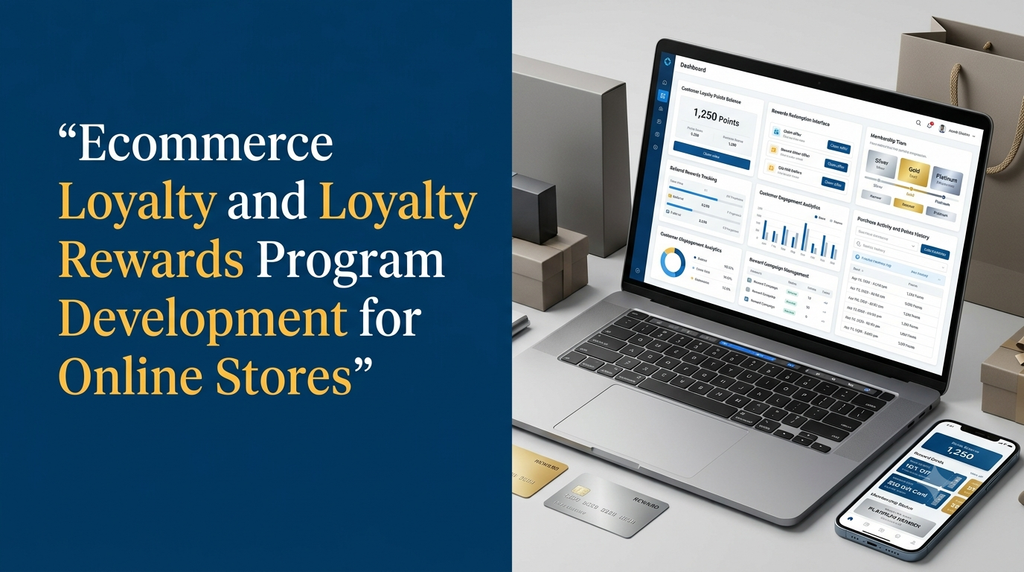
Ecommerce Loyalty and Rewards Program Development for Online Stores
Attracting customers to an online store is only one part of building a successful ecommerce business. Encouraging existing customers to return, purchase again and develop a long-term relationship with the brand is equally important.
An ecommerce loyalty and rewards program gives online stores a structured way to recognise customer engagement through reward points, discounts, cashback, referral benefits, membership levels and exclusive offers.
Instead of managing promotions manually, businesses can use custom loyalty program software to automate reward calculations, track customer activity, manage redemption rules and analyse program performance.
Whether you operate a WooCommerce website, Shopify store or custom ecommerce platform, a well-designed loyalty system can become an important part of your customer retention strategy.
This guide explains the essential features, reward models, integrations, development process and estimated costs involved in ecommerce loyalty and rewards program development.
What Is an Ecommerce Loyalty and Rewards Program?
An ecommerce loyalty and rewards program is a software-based system that allows online retailers to provide benefits to customers based on qualifying purchases or other eligible activities.
Customers may earn points when they purchase products, refer friends, create an account or complete specific promotional activities. They can later redeem eligible points for discounts, coupons, rewards or other benefits according to the store’s program rules.
The platform records customer activity, calculates reward balances, applies redemption conditions and provides administrators with tools to manage loyalty campaigns.
Why Do Online Stores Need Loyalty Program Software?
Customer loyalty software helps ecommerce businesses create consistent reward experiences instead of relying only on occasional discounts.
1. Encourage Repeat Purchases
Reward points and membership benefits can give customers an additional reason to return to the store and explore more products.
2. Improve Customer Engagement
Referral campaigns, birthday rewards, special offers and loyalty milestones provide opportunities to maintain customer engagement beyond the initial purchase.
3. Manage Rewards Automatically
Automated reward calculations reduce manual administration and help maintain consistent reward records across customer accounts.
4. Build Customer Relationships
Membership tiers and exclusive benefits allow businesses to recognise eligible customer activity and provide relevant experiences.
5. Understand Customer Behaviour
Loyalty analytics help businesses study reward usage, repeat purchases, referral activity and campaign performance.
Types of Ecommerce Loyalty and Rewards Programs
Businesses can choose one reward model or combine multiple models depending on their products, customers and business strategy.
1. Points-Based Loyalty Program
Customers earn points for qualifying purchases and redeem them for discounts or other benefits.
- Points for eligible purchases.
- Points balance in customer accounts.
- Minimum redemption thresholds.
- Configurable points conversion rates.
- Points expiry rules.
2. Tier-Based Membership Program
Customers are assigned membership levels according to defined purchase or engagement criteria.
- Silver membership.
- Gold membership.
- Platinum membership.
- Tier upgrade and downgrade rules.
- Exclusive benefits for eligible members.
3. Cashback Rewards Program
Customers receive a defined cashback benefit on qualifying purchases. The cashback may be credited to a store wallet or another supported reward balance, subject to the program’s terms.
- Cashback percentage configuration.
- Eligible product and category rules.
- Minimum purchase requirements.
- Cashback credit records.
- Usage and expiry conditions.
4. Referral Rewards Program
Existing customers receive benefits for referring new customers who complete qualifying actions.
- Unique referral codes or links.
- Referral tracking.
- New customer verification.
- Reward eligibility rules.
- Referral history.
- Fraud prevention checks.
5. Purchase Milestone Rewards
Businesses can provide rewards when customers reach defined milestones, such as completing a certain number of orders or reaching a qualifying purchase value.
6. Subscription or VIP Membership
Customers may receive additional benefits through a paid or invitation-based membership program. Benefits could include special pricing, exclusive offers or eligible delivery benefits. The business must clearly define membership fees, renewal conditions and cancellation rules where applicable.
Essential Features of Ecommerce Loyalty Program Software
1. Customer Loyalty Dashboard
A customer dashboard allows shoppers to view and manage their rewards.
- Available reward points.
- Points earned from orders.
- Points redemption history.
- Membership level.
- Available rewards and coupons.
- Referral activity.
- Points expiry information.
2. Reward Points Management
The points engine controls how rewards are earned, adjusted, redeemed and expired.
- Configurable earning rates.
- Category-specific reward rules.
- Product-specific reward settings.
- Points for selected customer activities.
- Manual adjustments by authorised administrators.
- Points transaction history.
- Refund and cancellation adjustments.
3. Reward Redemption Management
Customers should be able to use eligible rewards through a simple redemption process.
- Points-to-discount conversion.
- Coupon generation.
- Minimum points requirements.
- Maximum redemption limits.
- Product and category restrictions.
- Reward validity periods.
4. Membership Tier Management
The administrator can create membership levels and configure the conditions for entering or leaving each tier.
- Membership tier creation.
- Qualifying purchase thresholds.
- Tier validity periods.
- Automatic tier upgrades.
- Tier review and downgrade rules.
- Tier-specific rewards.
5. Referral Program Management
The referral module helps businesses encourage existing customers to introduce new shoppers.
- Unique referral codes.
- Referral link generation.
- Referral conversion tracking.
- Reward eligibility verification.
- Referral reward configuration.
- Referral campaign reporting.
6. Coupon and Discount Integration
The platform can connect rewards with the store’s existing coupon and discount functionality.
- Percentage-based discounts.
- Fixed-value coupons.
- Product-specific discounts.
- Category-based offers.
- Minimum order conditions.
- Coupon usage limits.
7. Admin Dashboard
The administrator dashboard provides tools to manage the complete loyalty program.
- Customer loyalty records.
- Points configuration.
- Reward campaign management.
- Membership tier configuration.
- Referral program settings.
- Redemption approval where required.
- Customer activity monitoring.
- Reward transaction history.
8. Automated Notifications
Customers can receive updates about their rewards and membership activities.
- Points earned after qualifying purchases.
- Reward redemption confirmation.
- Membership tier upgrade.
- Referral reward updates.
- Upcoming points expiry reminders.
- Special loyalty campaign announcements.
Notifications can be integrated with email, SMS and supported WhatsApp Business messaging services.
9. Loyalty Analytics and Reports
Reporting tools help administrators understand how customers interact with the loyalty program.
- Total enrolled customers.
- Points issued and redeemed.
- Outstanding points balance.
- Referral conversions.
- Membership tier distribution.
- Reward campaign performance.
- Repeat purchase activity.
- Unused and expired rewards.
How Does an Ecommerce Loyalty Program Work?
A typical points-based loyalty program follows a straightforward workflow.
- Customer registration: A shopper creates an account or joins the loyalty program.
- Eligible purchase: The customer completes an order that qualifies for rewards.
- Order verification: The system checks the order status and applicable reward conditions.
- Points calculation: The points engine calculates the eligible reward amount.
- Reward credit: Points are added to the customer’s loyalty balance according to the program rules.
- Reward redemption: The customer selects an available reward and applies it to an eligible order.
- Transaction recording: The system records the points earned, redeemed, adjusted or expired.
Example of an Ecommerce Reward Points System
Consider an online store that provides 10 reward points for every ₹100 of eligible purchase value.
| Eligible Purchase | Points Earned |
|---|---|
| ₹500 | 50 points |
| ₹1,000 | 100 points |
| ₹2,500 | 250 points |
| ₹5,000 | 500 points |
If the store defines 100 points as a ₹10 discount, a customer with 500 eligible points could redeem them for a ₹50 discount, subject to redemption conditions.
This is only an illustrative example. Actual reward values, eligible order amounts and redemption limits should be configured according to the store’s business model and financial calculations.
Important Loyalty Program Business Rules
Reward software needs clearly defined rules to prevent incorrect balances, unexpected discounts and reward abuse.
- Define which orders qualify for points.
- Specify whether shipping charges and taxes are included in reward calculations.
- Set rules for cancelled and refunded orders.
- Define points expiry conditions.
- Configure minimum and maximum redemption values.
- Prevent duplicate reward credits for the same transaction.
- Define referral eligibility and abuse prevention rules.
- Maintain an audit trail for manual adjustments.
- Clearly communicate program terms to customers.
Technology Stack for Loyalty Program Development
The technology stack depends on the ecommerce platform, customer volume, integration requirements and long-term maintenance needs.
- Frontend: React, Next.js or Vue.js.
- Backend: Laravel, Node.js or another suitable backend framework.
- Database: MySQL or PostgreSQL.
- APIs: REST APIs and ecommerce platform APIs.
- Authentication: Secure customer authentication and role-based access control.
- Cloud infrastructure: Suitable managed hosting or cloud services.
- Notifications: Email, SMS and approved messaging integrations.
A reliable points ledger should record each earning, redemption, expiry and adjustment as a separate transaction. This makes balances easier to reconcile and helps prevent inconsistent reward records.
WooCommerce Loyalty and Rewards Plugin Development
WooCommerce store owners can integrate loyalty features directly into their existing WordPress websites through a custom plugin.
A custom WooCommerce loyalty plugin can provide:
- Reward points for eligible WooCommerce orders.
- Customer points balance in My Account.
- Points redemption during checkout.
- Referral reward management.
- Membership tier configuration.
- Custom coupon integration.
- Points expiry management.
- Refund and cancellation adjustments.
- Administrator reports and settings.
The plugin should use appropriate WooCommerce hooks and APIs, support the store’s checkout configuration and be tested with the active theme and other extensions. Compatibility with the store’s WooCommerce version and checkout technology should be verified before deployment.
Integrations Required for Ecommerce Loyalty Software
Ecommerce Platform Integration
Connect the loyalty platform with WooCommerce, Shopify or a custom ecommerce website to retrieve customer, order and product information.
Payment Gateway Integration
Payment integrations can help verify successful transactions and coordinate reward eligibility with payment and refund events. The loyalty platform should not treat an initiated payment as a completed purchase without the appropriate confirmation.
CRM Integration
CRM integration helps businesses connect loyalty activity with customer communication and relationship management workflows.
Marketing Automation Integration
Customer segments and reward events can be used to trigger eligible campaigns, subject to customer consent and communication preferences.
ERP and Inventory Integration
For businesses with larger operations, integration with ERP and inventory systems can help connect customer rewards with product, order and sales information.
Custom Loyalty Software vs Ready-Made Loyalty Plugins
| Comparison | Ready-Made Plugin | Custom Software |
|---|---|---|
| Initial setup | Usually quicker | Requires development |
| Feature selection | Based on available features | Business-specific features |
| Workflow flexibility | Depends on plugin options | Greater control |
| Integrations | Supported integrations | Can be developed for required systems |
| Maintenance | Depends on vendor updates | Requires ongoing support |
| Cost structure | Licence or subscription fees | Development and maintenance costs |
A ready-made plugin may be suitable for stores with standard reward requirements. Custom development is worth considering when the business needs specialised points rules, multiple membership levels, custom referral workflows or integrations with internal software.
Security and Data Protection
Loyalty platforms maintain customer accounts, transaction records and reward balances. These records should be protected against unauthorised changes and misuse.
- Secure authentication and role-based permissions.
- Input validation and output sanitisation.
- Protection against duplicate reward transactions.
- Secure API communication.
- Audit logs for reward adjustments.
- Database backups and recovery planning.
- Protection of customer contact information.
- Fraud monitoring for suspicious referral activity.
- Privacy controls and appropriate data retention.
Ecommerce Loyalty Program Development Cost in India
The cost of building loyalty and rewards program software depends on the platform, number of features, integration requirements and complexity of the reward rules.
The following figures are illustrative development planning ranges for custom software in India. They are not fixed quotations or guaranteed market prices.
| Development Type | Indicative Cost |
|---|---|
| Basic reward points system | ₹35,000 – ₹70,000 |
| Points, redemption and admin dashboard | ₹70,000 – ₹1,40,000 |
| Advanced loyalty platform with tiers and referrals | ₹1,40,000 – ₹2,75,000 |
| Enterprise multi-store loyalty platform | ₹2,75,000 onwards |
Actual project costs may vary depending on UI/UX design, integrations, hosting, third-party licences, testing and maintenance requirements. Marketing messaging charges and external service subscriptions may be additional.
How to Choose the Right Loyalty Software Development Company
Selecting an experienced software development partner helps businesses create a loyalty platform that fits their ecommerce operations.
- Check experience in ecommerce application development.
- Review WooCommerce or Shopify integration experience.
- Discuss reward calculation and redemption requirements.
- Understand how points are adjusted after refunds.
- Ask about referral fraud prevention.
- Review dashboard and reporting capabilities.
- Confirm security and testing practices.
- Discuss maintenance and future feature upgrades.
Conclusion
Ecommerce loyalty and rewards program development gives online retailers a structured way to recognise customer purchases, manage reward points, create membership benefits and encourage ongoing engagement.
From simple points-based systems to advanced platforms with cashback, referrals and membership tiers, custom loyalty software can be designed around a store’s specific business model.
For WooCommerce stores, custom plugins can add loyalty functionality directly to the existing website. Businesses with more complex requirements can consider a separate loyalty management platform connected to their ecommerce, CRM and ERP systems.
The right solution should make rewards easy to understand for customers and easy to manage for the business.
Planning a Custom Ecommerce Loyalty Platform?
Greap Technologies helps businesses develop ecommerce websites, custom plugins, software applications and business automation solutions.
Discuss your loyalty points, referral rewards, membership tiers or ecommerce integration requirements with our team.
Website: www.greap.in
Phone: +91 70923 30168
WhatsApp: Discuss Your Project on WhatsApp
Frequently Asked Questions
1. What is ecommerce loyalty program software?
It is software that helps online stores manage customer reward points, discounts, referrals, membership benefits and reward redemption.
2. How does an ecommerce rewards points system work?
Customers earn points through eligible purchases or activities. The system records their points balance and allows them to redeem eligible points for discounts or other benefits.
3. Can a loyalty program be integrated with WooCommerce?
Yes. A custom WooCommerce plugin can connect reward calculations, customer accounts, order events and redemption functionality with the existing store.
4. Can customers redeem points during checkout?
Yes. The system can provide a checkout redemption option that applies eligible reward points according to the store’s configured rules.
5. Can an ecommerce loyalty program include referral rewards?
Yes. Referral features can generate unique codes or links, track qualifying conversions and credit rewards when the defined conditions are met.
6. What are loyalty membership tiers?
Membership tiers are levels such as Silver, Gold and Platinum. Customers qualify for different levels based on configured purchase or engagement criteria.
7. Can reward points be adjusted after an order refund?
Yes. The software can reverse or adjust the points associated with a refunded or cancelled order according to the loyalty program rules.
8. Can loyalty software send automatic notifications?
Yes. Email, SMS and supported WhatsApp integrations can notify customers about points earned, rewards redeemed, membership upgrades and expiry reminders.
9. How long does loyalty program software development take?
A basic points-based system may take a few weeks, while a more advanced platform with referral features, multiple integrations and membership tiers may require a longer development period.
10. How much does ecommerce loyalty software cost in India?
The cost depends on features, integrations and complexity. A basic custom solution may start around ₹35,000 as an illustrative planning estimate, while advanced platforms can cost significantly more.