Ecommerce Returns and Refund Management System Development
Managing product returns and customer refunds is an important part of running an ecommerce business. Customers expect a convenient return process, clear refund policies and regular updates about their requests. For online stores handling hundreds or thousands of orders, managing these activities manually can become difficult.
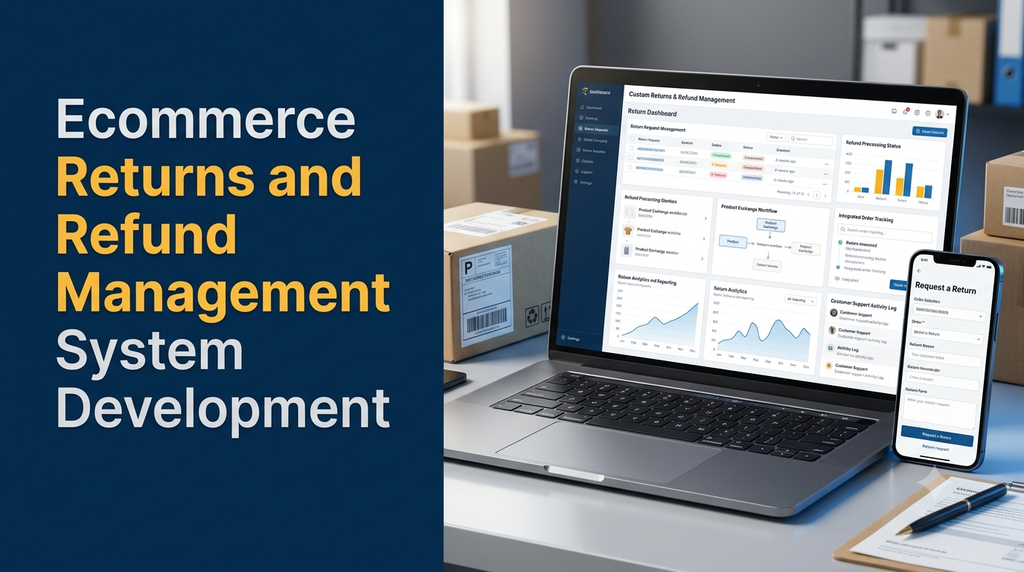
An ecommerce returns and refund management system helps businesses organise return requests, approve or reject returns, manage product exchanges, track returned shipments and process refunds through a structured workflow. Instead of depending on spreadsheets, emails and manual communication, businesses can manage the entire process through one centralised platform.
Custom ecommerce returns and refund management system development allows businesses to build workflows according to their products, return policies, payment methods, shipping partners and operational requirements.
This guide explains the features, workflows, integrations, development process and estimated costs involved in building a custom returns and refund management solution.
What Is an Ecommerce Returns and Refund Management System?
An ecommerce returns and refund management system is software that helps online retailers manage customer requests for returning purchased products, exchanging items or receiving refunds.
The platform connects customers, ecommerce administrators, warehouse teams, customer support staff, payment gateways and logistics providers through a common workflow.
For example, when a customer receives a damaged product, they can submit a return request through their account. The system checks the order details, applies the store’s return policy, allows the authorised team to review the request and tracks the returned product until the refund or replacement process is completed.
Why Do Ecommerce Businesses Need Returns Management Software?
Returns can create operational challenges when businesses depend entirely on manual processes. As order volumes increase, tracking individual requests and coordinating multiple departments becomes more complicated.
1. Centralised Return Request Management
All customer return requests can be viewed from one dashboard. Administrators can check order details, return reasons, submitted evidence, approval status and request history without searching through multiple communication channels.
2. Faster Refund Coordination
A structured workflow helps the finance or support team identify eligible refunds, review returned products and initiate the appropriate payment process.
3. Better Customer Communication
Customers can receive updates when their request is submitted, approved, rejected, collected, inspected or completed. This reduces uncertainty and unnecessary support enquiries.
4. Improved Inventory Visibility
Returned products can be recorded according to their condition. Warehouse teams can determine whether an item should be restocked, inspected, repaired, replaced or marked as damaged.
5. Useful Business Reports
Return analytics help businesses understand why customers return products, which products have higher return volumes and where operational improvements may be required.
Essential Features of an Ecommerce Returns and Refund Management System
1. Customer Return Request Portal
A customer-facing portal allows shoppers to submit return requests without contacting support manually.
- Customer login and order history.
- Product selection from completed orders.
- Return reason selection.
- Image or document attachment where required.
- Return, exchange or refund request options.
- Request submission confirmation.
- Return status tracking.
2. Return Merchandise Authorization (RMA)
Return Merchandise Authorization, commonly called RMA, is a process for identifying and approving product returns.
- Automatic or manual RMA number generation.
- Return eligibility checks.
- Approval and rejection workflows.
- Return labels or instructions where supported.
- Return request history.
- RMA status management.
3. Return Policy Configuration
Different products may have different return conditions. A configurable policy engine allows administrators to define rules according to their business requirements.
- Return eligibility period.
- Product category restrictions.
- Non-returnable product rules.
- Condition requirements.
- Order and payment eligibility.
- Exchange and refund conditions.
4. Refund Management
The refund module manages the financial side of a return request. It helps authorised staff review the refund amount and coordinate the transaction through the original payment method or another supported method.
- Refund eligibility verification.
- Full and partial refund support.
- Refund amount calculation.
- Payment gateway integration.
- Refund transaction references.
- Refund status tracking.
- Refund history and audit records.
Refund approval and actual payment execution should be handled as separate stages. A request marked as approved does not necessarily mean that the payment provider has completed the refund.
5. Product Exchange Management
Some customers prefer exchanging a product instead of receiving money back. The exchange module helps businesses coordinate replacement orders.
- Product and variant selection.
- Size or colour exchange requests.
- Replacement stock availability checks.
- Price difference calculation.
- Additional payment or refund handling.
- Replacement order creation.
6. Return Shipping and Pickup Management
Businesses can connect return requests with supported courier or logistics services.
- Return pickup scheduling.
- Courier assignment.
- Return shipment tracking.
- Pickup and delivery status updates.
- Tracking number management.
- Return shipment history.
7. Warehouse Inspection Management
When a returned item reaches the warehouse, staff can inspect its condition before approving the next action.
- Returned item receiving.
- Product condition recording.
- Inspection notes and images.
- Restock or quarantine decisions.
- Damaged product identification.
- Inspection history.
8. Automated Notifications
Notifications keep customers and internal teams informed throughout the return process.
- Return request confirmation.
- Approval or rejection notification.
- Pickup scheduling updates.
- Returned shipment updates.
- Inspection completion notification.
- Refund or exchange status notification.
Notifications can be delivered through email, SMS or supported WhatsApp Business integrations, depending on the selected providers.
9. Admin Dashboard and Analytics
The administrator dashboard provides a central view of return operations.
- Total return requests.
- Pending approvals.
- Approved and rejected requests.
- Refunds pending and completed.
- Exchange requests.
- Returns by product and category.
- Return reasons and trends.
- Warehouse inspection status.
How Does an Ecommerce Return and Refund Workflow Work?
A well-designed system follows a clear process from the initial customer request to the final refund or replacement.
- Order selection: The customer selects an eligible order and product.
- Request submission: The customer chooses a return reason and provides the required information.
- Eligibility verification: The system checks applicable return rules and order conditions.
- Request review: An authorised administrator approves, rejects or requests additional information.
- Return shipment: The customer receives return instructions or pickup details.
- Product inspection: The warehouse team records the condition of the returned item.
- Resolution: The business confirms the eligible refund, exchange, replacement or other policy-based outcome.
- Closure: The system records the completed transaction and updates the customer.
Important User Roles and Permissions
A custom returns management platform can support multiple user roles with permissions based on operational responsibilities.
| User Role | Main Responsibilities |
|---|---|
| Super Admin | System settings, user access and overall configuration. |
| Ecommerce Admin | Return policies, requests and operational monitoring. |
| Customer Support | Customer communication and request review. |
| Finance Team | Refund verification and transaction reconciliation. |
| Warehouse Staff | Returned product receiving and inspection. |
| Logistics Team | Pickup coordination and shipment tracking. |
| Customer | Return requests and status tracking. |
Integrations Required for Returns and Refund Software
Integrations connect the returns platform with the ecommerce store and other business systems. The required integrations depend on the store’s existing technology and operating model.
Ecommerce Platform Integration
The software can connect with platforms such as WooCommerce, Shopify or a custom ecommerce application to retrieve order information, product details, customer records and order status.
Payment Gateway Integration
Payment integrations help authorised users initiate and track eligible refunds. The implementation must follow the payment provider’s supported refund APIs and transaction rules.
Shipping and Courier Integration
Supported logistics APIs can be used for pickup requests, return labels and shipment tracking.
Inventory and ERP Integration
Integration with inventory or ERP software helps update stock records after returned products are inspected and approved for restocking.
CRM and Customer Support Integration
Connecting the platform with CRM or support tools helps teams view customer interactions and maintain consistent communication.
Custom Returns Management Software vs Manual Return Processing
| Area | Manual Process | Custom Software |
|---|---|---|
| Request tracking | Spreadsheets and emails | Centralised dashboard |
| Return approvals | Manual communication | Configurable workflow |
| Refund records | Separate transaction records | Centralised refund history |
| Customer updates | Manual messages | Automated notifications |
| Inventory updates | Manual coordination | Integrated stock workflow |
| Reporting | Manual calculations | Dashboard analytics |
Custom software requires an initial development investment and ongoing maintenance. However, it can provide greater control over business-specific workflows and integrations as the store grows.
Technology Stack for Development
The technology stack should be selected according to expected traffic, integration requirements, security needs and future scalability.
- Frontend: React, Next.js or Vue.js.
- Backend: Laravel, Node.js or another suitable framework.
- Database: MySQL or PostgreSQL.
- APIs: REST APIs or supported platform APIs.
- Authentication: Secure session management and role-based access control.
- Cloud infrastructure: A suitable managed hosting or cloud environment.
- Notifications: Email, SMS and approved messaging integrations.
For a WooCommerce store, a custom WordPress plugin may be appropriate when the requirements are closely connected to WooCommerce orders, products and customer accounts. A separate application may be better for complex multi-store or enterprise operations.
WooCommerce Returns and Refund Management Plugin Development
Businesses operating on WooCommerce may benefit from a custom returns and refund management plugin that works directly inside their WordPress administration environment.
A WooCommerce plugin can extend the store with features such as:
- Customer return request forms.
- WooCommerce order and product integration.
- Custom return approval workflows.
- RMA number generation.
- Refund status management.
- Product exchange requests.
- Admin notifications.
- Customer return history.
- Return analytics and reports.
Plugin development should follow WordPress and WooCommerce coding standards, use appropriate permission checks and sanitise and validate submitted data. Compatibility should also be tested against the store’s theme, extensions and supported WooCommerce versions.
Security and Data Protection Considerations
Returns and refund platforms handle customer information, order details and payment-related records. Security must be considered throughout the development process.
- Role-based access control for administrative functions.
- Secure authentication and session handling.
- Input validation and output sanitisation.
- Protected API credentials and webhook verification.
- HTTPS communication.
- Audit logs for approvals and refund actions.
- Regular backups and software updates.
- Secure storage of uploaded return evidence.
- Data retention and privacy controls.
Payment card details should not be stored directly by the returns application. Refunds should be handled through the authorised payment provider’s supported processes.
Development Process for a Custom Returns Management System
Step 1: Requirement Analysis
Understand the ecommerce platform, order volume, return policy, refund process, shipping arrangements and existing business software.
Step 2: Workflow Planning
Define customer journeys, approval rules, refund conditions, exchange processes and warehouse responsibilities.
Step 3: UI/UX Design
Design customer return forms, administrator dashboards, request details, inspection screens and reporting interfaces.
Step 4: Backend and Database Development
Build the return request engine, policy rules, user permissions, refund records, status management and audit history.
Step 5: Platform Integrations
Connect the software with the ecommerce platform, payment provider, logistics services and inventory systems where required.
Step 6: Testing
Test different return scenarios, partial refunds, exchanges, failed payment responses, duplicate requests, permissions and integration errors.
Step 7: Deployment and Maintenance
Deploy the system, monitor its performance, maintain compatibility and provide updates as business requirements change.
Ecommerce Returns and Refund Management Software Development Cost
The development cost depends on the number of features, platform integrations, workflow complexity, design requirements and expected usage.
The following figures are broad illustrative planning ranges for custom development in India, not fixed market prices or a project quotation.
| Development Type | Indicative Cost |
|---|---|
| Basic return request management | ₹40,000 – ₹80,000 |
| Returns and refund management with admin dashboard | ₹80,000 – ₹1,80,000 |
| Advanced platform with exchange and shipping integrations | ₹1,80,000 – ₹3,50,000 |
| Enterprise multi-store returns platform | ₹3,50,000 onwards |
These estimates may change significantly based on integrations, licensing, hosting, testing and support requirements. Payment gateway charges, courier service fees, messaging costs and third-party subscriptions may be additional.
How to Choose the Right Software Development Company
Selecting the right development partner is important because returns management involves several connected business operations.
- Review the company’s ecommerce development experience.
- Check its experience with WooCommerce, Shopify or custom ecommerce platforms.
- Discuss the return and refund workflow before development begins.
- Confirm which integrations are supported.
- Ask about security, testing and data protection.
- Understand the development timeline and project deliverables.
- Discuss post-launch maintenance and technical support.
- Ensure the solution can accommodate future business growth.
Conclusion
An ecommerce returns and refund management system helps online businesses organise return requests, coordinate product inspections, manage exchanges and track refunds through a structured process. It can improve operational visibility while giving customers a clearer way to manage their returns.
Whether you operate a WooCommerce store, a Shopify business or a custom ecommerce platform, the right solution depends on your return policies, order volume and integration requirements.
With custom ecommerce software development, businesses can create a returns workflow that fits their operations instead of relying on disconnected manual processes.
Looking for Custom Ecommerce Software Development?
Greap Technologies helps businesses plan and develop ecommerce websites, custom plugins, business software and workflow automation solutions.
Discuss your ecommerce returns and refund management requirements with our team.
Website: www.greap.in
Phone: +91 70923 30168
WhatsApp: Discuss Your Project on WhatsApp
Frequently Asked Questions
1. What is an ecommerce returns and refund management system?
It is software that helps online stores manage product return requests, approvals, exchanges, returned shipments, inspections and customer refunds through a centralised platform.
2. Why does an online store need returns management software?
It helps organise return operations, reduce manual coordination, maintain accurate records and provide customers with updates about their return requests.
3. Can returns management software integrate with WooCommerce?
Yes. A custom WooCommerce plugin or external application can connect with WooCommerce orders, products, customer accounts and supported refund workflows through appropriate APIs and hooks.
4. Can the system process automatic refunds?
The system can initiate eligible refunds through supported payment gateway APIs. Actual processing depends on the payment provider, transaction conditions and refund permissions.
5. What is an RMA number?
RMA stands for Return Merchandise Authorization. It is a reference number used to identify and track an approved or registered product return.
6. Can customers request product exchanges instead of refunds?
Yes. An exchange workflow can allow customers to request another size, colour or eligible product, subject to stock availability and store policies.
7. Can the software integrate with courier companies?
Yes. Supported courier APIs can be integrated for return pickup scheduling, shipping labels and shipment tracking.
8. Can returned products automatically update inventory?
Inventory updates can be automated after the returned product is received and inspected, according to the business’s restocking rules.
9. How long does it take to develop a returns management system?
A basic solution may take several weeks, while an advanced platform with multiple integrations and custom workflows can require a longer development period. The timeline depends on the approved project scope.
10. How much does custom returns management software cost in India?
The cost depends on features, integrations, platform choice and complexity. A basic custom solution may start around ₹40,000 as an illustrative planning estimate, with advanced systems costing more.