Headless Ecommerce Development: Shopify and WooCommerce Solutions
Modern ecommerce businesses need more than an attractive online store. Customers expect clear product information, convenient navigation, responsive mobile experiences, reliable checkout and consistent shopping journeys.
Traditional ecommerce platforms provide storefront themes, product management, checkout and administration within a connected system. This approach works well for many online stores.
However, some businesses require greater control over frontend design, content presentation, integrations and shopping experiences.
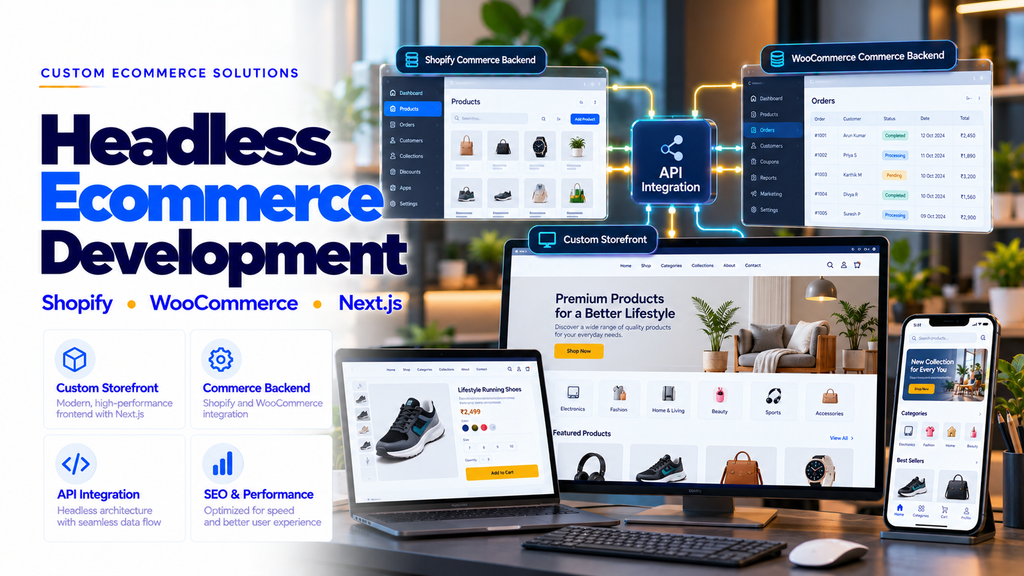
Headless ecommerce development separates the customer-facing storefront from the backend commerce platform.
For example, a business can develop a custom React or Next.js storefront while using Shopify or WooCommerce to manage products, orders and other commerce operations.
This approach can support customized shopping interfaces and flexible integrations, but it also introduces additional development and maintenance responsibilities.
In this guide, we explain how headless ecommerce works, compare Shopify and WooCommerce solutions, discuss Next.js storefront development and outline the features, SEO considerations, costs and challenges businesses should understand before starting a project.
What Is Headless Ecommerce?
Headless ecommerce is an architecture in which the frontend storefront is developed separately from the backend commerce system.
The frontend controls what customers see and interact with, while the backend manages commerce-related data and processes.
The two systems communicate through APIs.
A headless ecommerce solution may include:
- Custom storefront frontend
- Commerce backend
- Product catalogue APIs
- Cart and checkout integration
- Customer account functionality
- Content management integration
- Payment and shipping services
- Order management
How Does Headless Ecommerce Work?
In a traditional ecommerce website, the storefront and commerce administration are usually managed within the same platform.
In a headless architecture, these responsibilities are separated.
Frontend Storefront
The frontend provides the customer experience, including:
- Homepage
- Category pages
- Product detail pages
- Search and filters
- Shopping cart
- Customer account interfaces
Commerce Backend
The backend manages business operations such as:
- Product information
- Inventory
- Customer records
- Orders
- Discount rules
- Payment workflows
- Shipping information
API Communication
APIs connect the frontend and backend, allowing the storefront to retrieve product information and perform supported commerce operations.
The exact architecture depends on the selected platform, integrations and business requirements.
Why Businesses Choose Headless Ecommerce
Businesses may consider headless ecommerce when standard themes or platform-specific frontend limitations make their requirements difficult to implement.
Potential benefits include:
- Greater frontend design flexibility
- Custom customer journeys
- Reusable frontend components
- Integration with external systems
- Flexible content presentation
- Independent frontend development workflows
- Support for multiple customer-facing experiences
Headless ecommerce is not automatically faster, cheaper or better for SEO. Those outcomes depend on the architecture and implementation.
1. Headless Shopify Ecommerce Development
Shopify can serve as the commerce backend for a custom headless storefront.
Businesses can build customer-facing interfaces using suitable frontend technologies while connecting to Shopify through supported APIs.
Potential features include:
- Custom homepage
- Product catalogue
- Collections
- Product detail pages
- Product variants
- Cart functionality
- Customer accounts
- Shopify checkout integration
Platform capabilities, API permissions and checkout customization options depend on Shopify’s supported features and applicable plans.
2. Shopify Storefront API Integration
Shopify provides a Storefront API for building custom shopping experiences.
Developers can use supported API operations to work with commerce data and storefront functionality.
Potential use cases include:
- Retrieving products
- Displaying collections
- Working with product variants
- Creating and updating carts
- Preparing checkout transitions
- Supporting customer experiences
API usage should follow Shopify’s current documentation, permissions and rate limits.
3. Shopify Hydrogen Development
Hydrogen is Shopify’s React-based framework for developing custom Shopify storefronts.
It provides commerce-focused development tools and integrations.
Potential advantages include:
- Shopify-focused architecture
- React-based development
- Commerce-oriented components
- Storefront API integration
- Custom shopping experiences
Hydrogen is one option for Shopify headless development. Other frontend frameworks may also be used.
4. Headless WooCommerce Development
WooCommerce can be used as a commerce backend while a separate frontend handles the customer experience.
WooCommerce is built on WordPress and provides ecommerce functionality for products, orders and related business operations.
A headless WooCommerce architecture may use React, Next.js or another suitable frontend technology.
Potential features include:
- Custom storefront design
- Product categories
- Product variants
- Shopping cart
- Customer accounts
- Checkout workflows
- Order history
5. WooCommerce API Integration
WooCommerce provides APIs for accessing and managing supported commerce resources.
Developers may use the appropriate WooCommerce Store API and authenticated REST API endpoints depending on the operation.
Potential use cases include:
- Product retrieval
- Product categories
- Cart operations
- Checkout functionality
- Order management
- Inventory administration
Authentication requirements differ between public storefront operations and privileged administrative operations.
Private API credentials must not be exposed in browser code.
6. Headless Shopify vs Headless WooCommerce
| Factor | Headless Shopify | Headless WooCommerce |
|---|---|---|
| Commerce Backend | Shopify | WooCommerce with WordPress |
| Hosting | Shopify manages its commerce platform | Business manages suitable WordPress hosting |
| Frontend | Hydrogen, Next.js or another suitable framework | Next.js, React or another suitable framework |
| APIs | Shopify storefront and administrative APIs | WooCommerce Store API and REST API |
| Customization | Within platform and API capabilities | Flexible through WordPress, WooCommerce and custom code |
| Maintenance | Custom frontend and integrations | Custom frontend, WordPress, plugins, hosting and integrations |
| Typical Fit | Businesses preferring managed commerce infrastructure | Businesses preferring WordPress-based commerce control |
The better choice depends on business requirements, existing systems, operational preferences and total ownership costs.
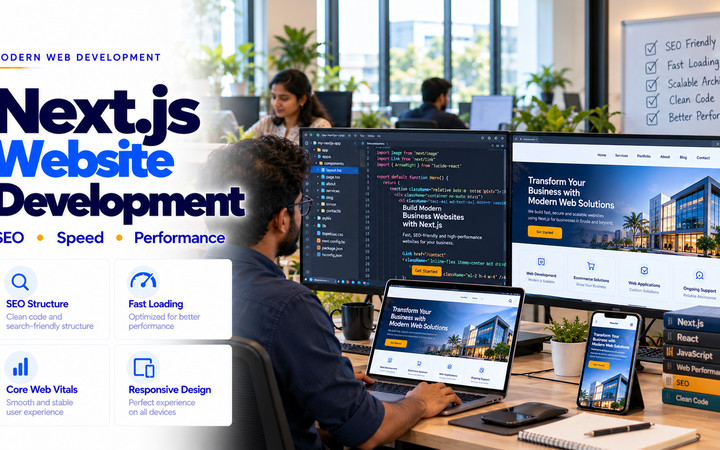
7. Next.js Headless Ecommerce Development
Next.js is commonly considered for custom ecommerce storefronts because it supports React-based interfaces and multiple rendering approaches.
Potential capabilities include:
- Custom product pages
- Category landing pages
- Server-rendered content
- Static content generation
- Metadata management
- Responsive interfaces
- API integration
Developers must select appropriate caching, rendering and data-fetching strategies for ecommerce content.
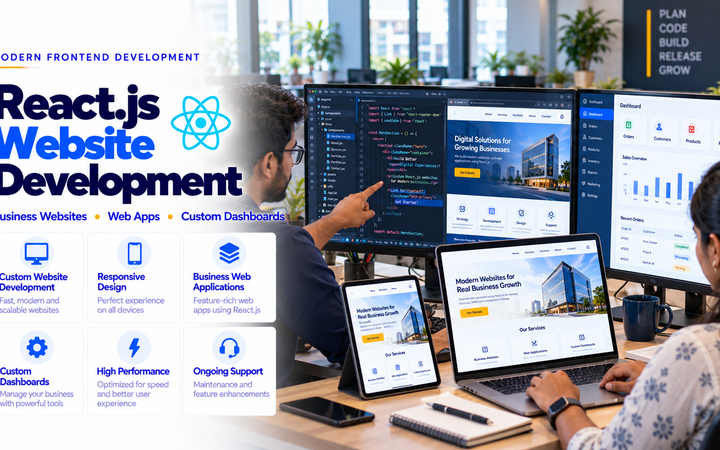
8. React.js Headless Ecommerce Development
React can be used to build reusable components for a custom ecommerce storefront.
Potential components include:
- Product cards
- Category navigation
- Search interfaces
- Product filters
- Variant selectors
- Shopping cart
- Customer dashboards
React provides the interface foundation, while routing, rendering and other application requirements depend on the selected architecture.
9. Custom Ecommerce UI/UX Design
Headless architecture allows businesses to design storefront interfaces independently of standard ecommerce themes.
Important design considerations include:
- Clear navigation
- Readable product information
- Consistent product cards
- Convenient filtering
- Mobile-friendly product selection
- Accessible checkout journeys
- Clear calls to action
Design decisions should be guided by actual customer requirements and usability testing.
10. Mobile-First Headless Ecommerce
Customers may browse ecommerce websites on smartphones, tablets and desktop computers.
Mobile-first development considerations include:
- Responsive layouts
- Touch-friendly navigation
- Readable product descriptions
- Optimized product images
- Accessible forms
- Convenient cart access
- Clear checkout steps
11. Headless Ecommerce SEO
Headless ecommerce can support search engine optimization when public-facing pages are implemented correctly.
Important technical SEO elements include:
- Search-accessible product content
- Unique page titles
- Meta descriptions
- Canonical URLs
- XML sitemaps
- Structured data
- Internal linking
- Breadcrumb navigation
- Mobile usability
- Appropriate rendering
Headless architecture does not automatically improve search rankings.
12. Server-Side Rendering for Ecommerce SEO
Server-side rendering can help deliver meaningful HTML content for selected ecommerce pages.
Potential use cases include:
- Dynamic product pages
- Category pages
- Search-related landing pages
- Frequently updated public content
Rendering decisions should account for caching, freshness, server response times and indexing requirements.
13. Static Generation for Ecommerce Pages
Some ecommerce pages can be generated ahead of time.
Potential examples include:
- About pages
- Service information
- Editorial landing pages
- Selected category content
- Blog articles
Frequently changing prices and inventory require suitable data freshness strategies.
14. Product Structured Data
Structured data can help search engines understand product information.
Potential product-related properties include:
- Product name
- Description
- Image
- Brand
- Price
- Currency
- Availability
Structured data should accurately match the visible product information and follow search engine guidelines.
15. Headless Ecommerce Core Web Vitals
Core Web Vitals evaluate aspects of loading performance, responsiveness and visual stability.
Important metrics include:
- Largest Contentful Paint: Loading performance
- Interaction to Next Paint: Responsiveness
- Cumulative Layout Shift: Visual stability
Custom storefronts require careful image, JavaScript, caching and server optimization.
16. Product Image Optimization
Ecommerce websites frequently display many product images.
Potential optimization techniques include:
- Responsive image sizes
- Modern image formats
- Appropriate compression
- Lazy loading
- Image dimension declarations
- Optimized product galleries
17. Ecommerce Product Catalogue Development
A headless storefront may retrieve product information from Shopify or WooCommerce.
Potential catalogue features include:
- Product categories
- Product collections
- Product specifications
- Product images
- Variants
- Availability information
- Related products
18. Product Search and Filtering
Search and filtering help customers discover relevant products.
Potential features include:
- Keyword search
- Category filters
- Price filters
- Brand filters
- Attribute filters
- Sorting
- Search suggestions
Advanced search may require a dedicated search service or additional backend infrastructure.
19. Product Variants and Options
Some ecommerce products have multiple purchasing options.
Potential examples include:
- Size
- Colour
- Material
- Pack quantity
- Model
- Configuration
Variant selection should correctly update price, availability and cart information.
20. Shopping Cart Development
Headless ecommerce requires reliable cart integration.
Potential cart features include:
- Add to cart
- Update quantity
- Remove items
- Variant selection
- Cart totals
- Discount handling
- Checkout transition
Cart state and pricing should remain consistent with the commerce backend.
21. Checkout Integration
Checkout is a critical ecommerce workflow.
Headless storefronts must use supported checkout mechanisms provided by the selected commerce platform or an appropriately integrated checkout solution.
Potential considerations include:
- Customer information
- Delivery addresses
- Shipping methods
- Taxes
- Discounts
- Payment options
- Order confirmation
Shopify and WooCommerce have different checkout architectures and customization requirements.
22. Payment Gateway Integration
Headless ecommerce storefronts may integrate with supported payment providers through their commerce backend or approved payment workflows.
Important requirements include:
- Secure payment initiation
- Server-side verification
- Transaction status handling
- Failed payment handling
- Order confirmation
- Refund workflows
Payment data handling should follow the relevant provider requirements and security standards.
23. Inventory Management Integration
Product availability should remain consistent across the storefront and commerce backend.
Potential features include:
- Stock availability
- Variant inventory
- Low-stock information
- Inventory synchronization
- Out-of-stock handling
Inventory data may change between browsing and checkout, so final availability should be validated through backend workflows.
24. Order Management Integration
Headless storefronts must integrate with backend order workflows.
Potential features include:
- Order creation
- Order confirmation
- Order status
- Order history
- Cancellation requests
- Return requests
- Refund status
25. Customer Account Development
Customer accounts can support personalized shopping experiences.
Potential features include:
- Registration
- Login
- Profile management
- Saved addresses
- Order history
- Wishlist
- Account preferences
Authentication architecture should follow the selected platform’s supported customer account capabilities.
26. Wishlist Development
Wishlist features allow customers to save products for later consideration.
Potential functionality includes:
- Save products
- Remove saved products
- View wishlist
- Move products to cart
- Synchronize saved items for logged-in customers
Wishlist functionality may require custom storage or a compatible third-party service.
27. Discounts and Promotional Offers
Headless ecommerce storefronts may display promotions managed through the commerce backend.
Potential features include:
- Discount codes
- Promotional banners
- Sale pricing
- Eligible product offers
- Customer-specific promotions
Discount eligibility and final totals should be validated by the commerce backend.
28. Multi-Currency Ecommerce
Businesses selling internationally may require multi-currency functionality.
Potential considerations include:
- Currency display
- Localized pricing
- Exchange rate handling
- Checkout currency support
- Tax and shipping rules
Supported features depend on the commerce platform, configuration and payment providers.
29. Multilingual Headless Ecommerce
Businesses serving multiple language groups may need localized storefronts.
Potential features include:
- Language selection
- Translated navigation
- Localized product content
- Language-specific URLs
- Appropriate hreflang implementation
Translation quality and content consistency should be managed carefully.
30. Headless Ecommerce CMS Integration
Some businesses use a separate content management system for marketing pages and editorial content.
Potential content includes:
- Homepage sections
- Brand stories
- Buying guides
- Blog articles
- Landing pages
- Campaign content
A headless CMS can be connected to the storefront alongside the commerce backend.
31. ERP Integration
Businesses may connect ecommerce systems with ERP platforms.
Potential workflows include:
- Product synchronization
- Inventory synchronization
- Order transfer
- Customer records
- Invoice information
- Fulfilment updates
Integration requirements depend on the ERP system’s APIs and data model.
32. CRM Integration
CRM integrations may help businesses organize customer relationships.
Potential workflows include:
- Customer information
- Enquiry records
- Customer segmentation
- Support requests
- Sales follow-up workflows
Customer data should be processed according to applicable privacy requirements.
33. Shipping and Logistics Integration
Headless ecommerce stores may integrate with supported shipping services.
Potential features include:
- Shipping rate calculation
- Delivery options
- Shipment creation
- Tracking information
- Delivery status updates
34. Headless Ecommerce for B2B Businesses
Manufacturers, wholesalers and distributors may require ecommerce experiences different from standard retail stores.
Potential features include:
- Business customer accounts
- Bulk ordering
- Quotation requests
- Customer-specific pricing
- Product catalogues
- Purchase order workflows
- Dealer portals
Some B2B workflows may require custom backend services beyond the standard commerce platform.
35. Headless Ecommerce for Manufacturers
Manufacturing businesses may use custom storefronts to present detailed product information.
Potential features include:
- Product specifications
- Technical documentation
- Product variants
- Bulk enquiry forms
- Dealer information
- Quotation requests
36. Headless Ecommerce for Textile Businesses
Textile manufacturers and traders may need ecommerce interfaces with specialized product attributes.
Potential features include:
- Fabric categories
- Yarn listings
- Material specifications
- Colour variants
- Bulk order requests
- Business customer accounts
37. Headless Ecommerce for Fashion Stores
Fashion retailers may use headless ecommerce for customized product presentation.
Potential features include:
- Collection pages
- Product galleries
- Size selection
- Colour variants
- Wishlist
- Related products
38. Headless Ecommerce for Electronics Stores
Electronics retailers may need detailed product specifications and comparison interfaces.
Potential features include:
- Product specifications
- Brand filters
- Product comparison
- Variant selection
- Availability information
- Warranty information
39. Headless Ecommerce for Grocery Businesses
Grocery businesses may require storefronts designed for frequent ordering.
Potential features include:
- Product categories
- Search
- Cart
- Delivery area selection
- Delivery slots
- Order history
- Repeat ordering
40. Headless Ecommerce for Multi-Brand Businesses
Businesses managing multiple brands may require customized storefront experiences.
Potential capabilities include:
- Brand-specific designs
- Shared commerce integrations
- Centralized product information
- Custom navigation
- Separate marketing content
The feasibility of sharing backend resources depends on the platform architecture and account configuration.
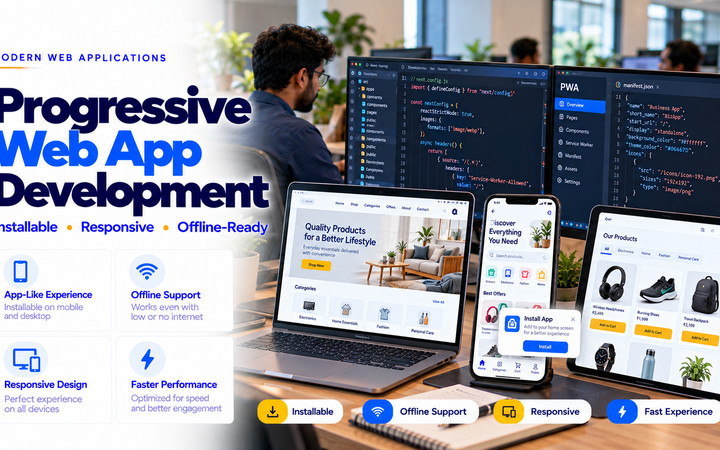
41. Headless Ecommerce and Progressive Web Apps
A custom headless storefront can be enhanced with Progressive Web App capabilities.
Potential features include:
- Installable storefront
- Responsive mobile interface
- Selected offline content
- Service worker caching
- Supported push notifications
Live inventory, checkout and payments still require appropriate network and backend handling.
42. Headless Ecommerce Security
Headless ecommerce introduces multiple connected systems, making security planning important.
Key safeguards include:
- Secure API communication
- Protected credentials
- Server-side authorization
- Input validation
- Secure session handling
- Payment security
- Dependency updates
- Logging and monitoring
- Security testing
Administrative API credentials must remain on trusted backend systems.
43. Headless Ecommerce Hosting
Hosting requirements depend on the frontend framework and rendering strategy.
Potential options include:
- Managed frontend hosting
- Compatible Node.js hosting
- Cloud infrastructure
- Static hosting for suitable exported pages
- VPS hosting
Shopify manages its own commerce platform infrastructure, while WooCommerce requires appropriate WordPress hosting and maintenance.
44. Can Headless Ecommerce Run on Shared Hosting?
Some statically exported frontend websites can be deployed on compatible shared hosting.
However, server-rendered Next.js applications and runtime-dependent functionality may require Node.js hosting or managed infrastructure.
WooCommerce backend hosting must also support the required WordPress and ecommerce workload.
45. Headless Ecommerce Maintenance
Headless ecommerce requires maintenance across the custom frontend and its integrations.
Potential activities include:
- Frontend dependency updates
- API compatibility checks
- Security patches
- Checkout testing
- Product synchronization checks
- Performance optimization
- Bug fixes
- Feature improvements
WooCommerce projects may also require WordPress core, plugin and hosting maintenance.
46. Headless Ecommerce Development Cost
Headless ecommerce development cost depends on frontend complexity, backend platform, integrations and business requirements.
Important cost factors include:
- Custom UI/UX design
- Number of storefront pages
- Frontend framework
- Shopify or WooCommerce configuration
- Product catalogue complexity
- Search and filters
- Cart and checkout integration
- Customer accounts
- CMS integration
- ERP or CRM integration
- SEO implementation
- Performance testing
- Hosting
- Maintenance
A headless ecommerce project may cost more to build and maintain than a conventional theme-based store because it requires a separately developed frontend.
47. Headless Ecommerce Budget Planning
| Component | Typical Scope | Cost Consideration |
|---|---|---|
| UI/UX Design | Custom storefront layouts | Design complexity |
| Frontend Development | React or Next.js storefront | Pages and features |
| Commerce Backend | Shopify or WooCommerce | Platform fees and configuration |
| API Integration | Products, carts and checkout | Integration complexity |
| SEO | Metadata, rendering and structured data | Content and technical scope |
| Hosting | Frontend and backend infrastructure | Runtime requirements |
| Maintenance | Updates, testing and support | Agreed service scope |
48. Headless Ecommerce Development Timeline
Development time depends on design requirements, product catalogue complexity, integrations, checkout workflows and testing.
A small custom storefront may require less time than a multi-brand ecommerce platform with ERP integration and customer-specific pricing.
Businesses should define milestones and acceptance criteria before development begins.
49. Headless Ecommerce Development Process
- Requirement Analysis: Understand business goals and customers.
- Platform Selection: Evaluate Shopify and WooCommerce.
- Architecture Planning: Define frontend and backend responsibilities.
- UI/UX Design: Create responsive storefront designs.
- Commerce Configuration: Prepare products, categories and settings.
- Frontend Development: Build custom storefront components.
- API Integration: Connect products, carts and customer workflows.
- Checkout Integration: Configure supported checkout processes.
- SEO Implementation: Configure metadata and indexable content.
- Performance Optimization: Improve assets and rendering.
- Testing: Validate shopping journeys and integrations.
- Security Review: Check authentication and credentials.
- Deployment: Configure production infrastructure.
- Maintenance: Monitor and update the platform.
50. Migrating to Headless Ecommerce
Businesses with existing Shopify or WooCommerce stores may consider migrating their storefront to a headless architecture.
Important activities include:
- Current website assessment
- Product catalogue review
- Integration audit
- URL inventory
- SEO migration planning
- Redirect mapping
- Checkout testing
- Customer account review
- Performance testing
Poorly planned migrations can create technical problems and search visibility losses.
51. When Should Businesses Avoid Headless Ecommerce?
Headless architecture may not be the best option when a business needs a simple store with limited customization requirements.
A conventional Shopify or WooCommerce theme may be more practical when:
- Budget is limited
- Standard storefront features are sufficient
- Fast initial setup is the main priority
- The business prefers theme-based editing
- There is no need for complex integrations
- Long-term custom development resources are limited
Businesses should choose architecture based on actual needs rather than technology trends.
52. Headless Ecommerce Development in Erode and Tamil Nadu
Businesses in Erode and nearby locations may explore headless ecommerce for retail stores, manufacturers, wholesalers and brands requiring customized online shopping experiences.
Relevant locations include:
- Erode
- Perundurai
- Bhavani
- Anthiyur
- Gobichettipalayam
- Sathyamangalam
- Modakkurichi
- Kodumudi
- Nambiyur
- Chennimalai
- Kavindapadi
- Ammapettai
- Arachalur
- Sivagiri
- Punjai Puliampatti
- Thalavadi
- Solar
- Surampatti
- Veerappanchatram
- Nasiyanur
Businesses in Coimbatore, Tiruppur, Salem, Karur, Namakkal, Chennai, Madurai and Tiruchirappalli may also consider custom headless ecommerce solutions.
53. How to Choose a Headless Ecommerce Development Company
Before selecting a development provider, consider:
- Understanding of ecommerce requirements
- Shopify or WooCommerce expertise
- API integration knowledge
- React and Next.js development experience
- Checkout implementation knowledge
- Technical SEO capabilities
- Performance optimization experience
- Security practices
- Testing procedures
- Hosting and maintenance support
Ask for relevant project examples, a written scope and clear responsibilities for the frontend and commerce backend.
54. Common Headless Ecommerce Development Mistakes
- Choosing headless architecture without a clear requirement
- Ignoring checkout limitations
- Exposing private API credentials
- Using incorrect caching for prices and stock
- Failing to plan customer authentication
- Ignoring SEO rendering requirements
- Creating duplicate product URLs
- Skipping redirect planning
- Overloading the frontend with JavaScript
- Ignoring mobile usability
- Skipping payment testing
- Underestimating maintenance costs
55. Headless Ecommerce Launch Checklist
- Define business objectives.
- Choose Shopify or WooCommerce.
- Confirm required platform capabilities.
- Plan the frontend architecture.
- Prepare responsive UI/UX designs.
- Configure product data.
- Implement product APIs.
- Develop search and filters.
- Implement cart functionality.
- Integrate supported checkout workflows.
- Configure customer accounts.
- Review payment security.
- Implement metadata.
- Configure canonical URLs.
- Generate XML sitemaps.
- Add appropriate structured data.
- Optimize images.
- Test Core Web Vitals.
- Review inventory synchronization.
- Test order processing.
- Test mobile usability.
- Check accessibility.
- Configure hosting.
- Plan maintenance.
56. How Greap Technologies Can Help
Greap Technologies can help businesses in Erode and Tamil Nadu discuss custom ecommerce website requirements, including headless storefront architecture.
Depending on the agreed project scope, solutions may include:
- Headless ecommerce requirement analysis
- Shopify storefront development
- WooCommerce website development
- Custom React ecommerce interfaces
- Next.js ecommerce storefronts
- Shopify Storefront API integration
- WooCommerce API integration
- Product catalogue development
- Cart and checkout integration
- Customer account interfaces
- Custom ecommerce UI/UX design
- SEO-oriented storefront architecture
- Performance optimization
- Backend integrations
- Testing and deployment
- Maintenance support
Explore Greap Technologies for ecommerce development, website development, custom software and digital business solutions.
Conclusion
Headless ecommerce development gives businesses greater flexibility to create custom storefront experiences while using established commerce platforms such as Shopify and WooCommerce.
Shopify may be suitable for businesses that prefer managed commerce infrastructure, while WooCommerce may appeal to businesses that want WordPress-based flexibility and greater control over their hosting environment.
Next.js and React can be used to develop custom storefronts, but successful headless ecommerce requires careful API integration, checkout planning, SEO implementation, performance optimization and maintenance.
Before choosing headless architecture, businesses should evaluate their requirements, available budget, existing integrations and long-term operational needs.
Planning a Custom Headless Ecommerce Website?
Greap Technologies can help you discuss Shopify and WooCommerce storefront requirements, custom React and Next.js interfaces, ecommerce integrations and online store development.
Frequently Asked Questions
1. What is headless ecommerce development?
Headless ecommerce development separates the customer-facing storefront from the backend commerce platform and connects them through APIs.
2. Can Shopify be used for headless ecommerce?
Yes. Shopify supports custom storefront development through supported APIs and tools such as Hydrogen.
3. Can WooCommerce be used as a headless backend?
Yes. WooCommerce can provide commerce data and operations to a separate frontend through appropriate APIs.
4. Which is better for headless ecommerce, Shopify or WooCommerce?
The better choice depends on hosting preferences, customization requirements, existing systems, maintenance resources and platform capabilities.
5. Can Next.js be used with Shopify?
Yes. Next.js can be used to develop a custom Shopify storefront connected through supported APIs.
6. Can Next.js be used with WooCommerce?
Yes. Next.js can connect to WooCommerce through supported API interfaces.
7. Is headless ecommerce better for SEO?
Headless ecommerce can support strong technical SEO when implemented correctly, but it does not automatically improve search rankings.
8. Is headless ecommerce faster than traditional ecommerce?
Not necessarily. Performance depends on rendering, hosting, APIs, caching, JavaScript and frontend optimization.
9. Does headless ecommerce support online payments?
Yes. Payments can be handled through supported commerce checkout and payment integrations.
10. How much does headless ecommerce development cost?
Cost depends on custom design, frontend development, commerce backend, API integrations, checkout requirements, SEO and maintenance.
11. Can an existing Shopify or WooCommerce store become headless?
Many existing stores can adopt a custom frontend, but feasibility depends on current features, integrations and platform limitations.
12. Does Greap Technologies offer headless ecommerce development?
Greap Technologies can assess headless ecommerce requirements and propose Shopify or WooCommerce solutions according to the agreed project scope.