A Hotel Property Management System (Hotel PMS) is software that helps independent hotels manage reservations, room availability, guest information, check-in and check-out, housekeeping, billing and daily front-desk operations from one central platform. Instead of maintaining separate spreadsheets, registers and disconnected applications, hotel staff can work with a shared system that keeps operational information organised.
For independent hotels, boutique properties, lodges and small hotel groups, a custom hotel PMS can be designed around the property’s room categories, booking procedures, billing rules and staff responsibilities. Hotel property management system development focuses on building a practical operating platform that suits the hotel’s actual workflow.
Why Do Independent Hotels Need a Property Management System?
Many independent hotels manage their operations through a combination of paper registers, spreadsheets, phone calls, messaging applications and online travel agency dashboards. This approach may be manageable when there are very few rooms, but it becomes difficult as reservation volume and staff responsibilities increase.
A central hotel management platform can help staff:
- View room availability without checking multiple records.
- Record walk-in, telephone and online reservations.
- Manage guest details and booking history.
- Track arrivals, departures and room assignments.
- Coordinate housekeeping and room readiness.
- Prepare guest bills and record payments.
- Monitor cancellations, advances and outstanding balances.
- Review occupancy, reservation and revenue reports.
The objective is not to automate every hotel decision. It is to make accurate information available to the right staff members and reduce repetitive administrative work.
Who Can Use Custom Hotel PMS Software?
A hotel PMS can be developed for different property sizes and operating models. The features should depend on the property’s actual needs rather than simply copying the module list of a large hotel chain.
Independent hotels
Small and medium-sized hotels can use a central system for room bookings, guest registration, front-desk activity, billing and housekeeping.
Boutique hotels
Boutique properties may need flexible room categories, personalised guest records, reservation notes, special requests and service coordination.
Lodges and business accommodation
Lodges and business hotels can benefit from quick reservation entry, walk-in guest handling, room allocation, payment tracking and daily reports.
Resorts and serviced accommodation
Properties offering additional services may require package management, activity reservations, restaurant charges, housekeeping coordination and guest service records.
Small hotel groups
Businesses operating multiple properties may need separate property-level access with central reporting, shared customer records and consolidated management controls.
Essential Features of a Hotel Property Management System
1. Reservation and booking management
The reservation module records and manages bookings from different sources. Staff should be able to create a reservation, select dates, assign a room category, enter guest details and record the booking status.
Useful reservation features include:
- New reservation creation and editing.
- Walk-in booking registration.
- Telephone and direct booking records.
- Arrival and departure date management.
- Room category selection.
- Number of guests and occupancy details.
- Advance payment records.
- Reservation confirmation and cancellation.
- Special requests and internal notes.
- Booking history and status tracking.
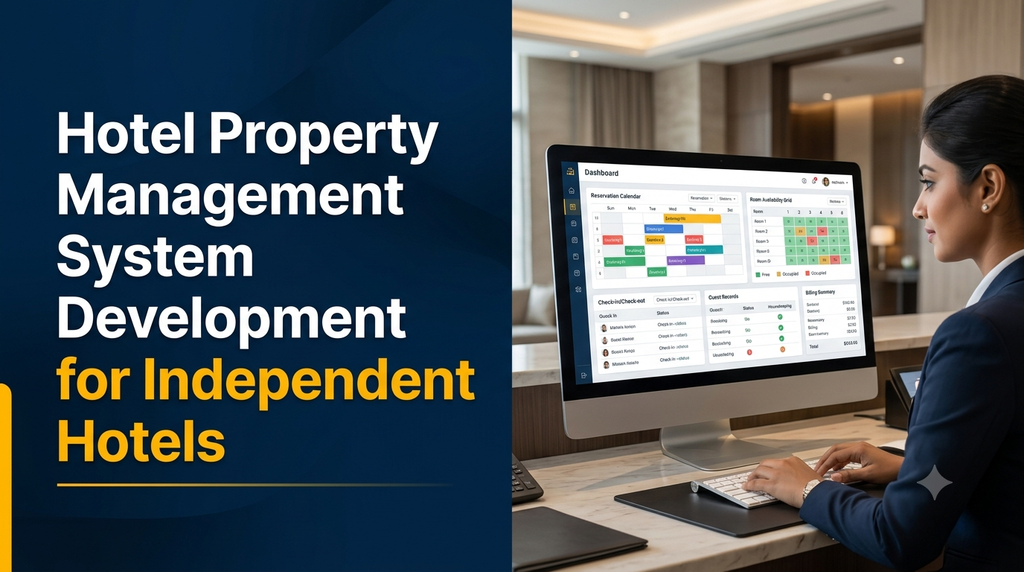
A reservation calendar should help staff identify available rooms and overlapping bookings before confirming a reservation. The system should prevent conflicting room assignments through appropriate availability checks.
2. Room inventory and availability management
Room inventory management gives the front desk a clear view of the property’s rooms, categories and operational status.
Depending on the property, the system may track:
- Room number and room category.
- Occupancy capacity.
- Standard room rate and applicable rate plans.
- Current reservation and guest assignment.
- Available, occupied and reserved status.
- Cleaning and inspection status.
- Out-of-order or maintenance status.
Room status and reservation status should be handled separately. For example, a room may be unoccupied but unavailable because maintenance work is pending. Clear status definitions help avoid incorrect room allocation.
3. Front desk management
The front desk is one of the most frequently used areas of a hotel PMS. Staff need a simple interface to find bookings, verify guest details, allocate rooms and process guest departures.
Common front-desk functions include:
- Today’s arrival and departure lists.
- Guest search by name, booking reference or contact details.
- Room allocation and reassignment.
- Check-in and check-out recording.
- Guest identification record management, subject to applicable rules.
- Reservation modification.
- Early arrival and late departure notes.
- Outstanding payment visibility.
4. Guest profile management
A guest profile stores relevant information needed to manage a reservation and provide service during the stay. It can also help the hotel maintain a useful history of previous visits.
A guest record may include:
- Guest name and contact information.
- Booking and stay history.
- Reservation preferences and special requests.
- Associated invoice and payment references.
- Communication and service notes.
- Guest feedback records, where collected.
Access to personal information should be restricted to authorised staff. The hotel should collect only information it needs for legitimate operational and legal purposes and follow applicable privacy and record-retention requirements.
5. Check-in and check-out workflow
A structured arrival and departure workflow helps the front desk update reservation and room records consistently.
| Stage | System activity |
|---|---|
| Guest arrival | Find the reservation and verify booking details. |
| Room allocation | Assign an available and suitable room. |
| Check-in | Record arrival time and update the stay status. |
| During stay | Record service charges, requests and relevant notes. |
| Check-out preparation | Review room charges, additional services and payments. |
| Departure | Generate the final bill, record settlement and update room status. |
The precise steps can be configured according to the hotel’s policies. For example, some properties may require additional approval before room reassignment or bill adjustments.
6. Housekeeping management
Housekeeping coordination is important because room availability depends not only on reservations but also on cleaning, inspection and maintenance.
A housekeeping module can support:
- Daily room cleaning lists.
- Room cleaning assignment to staff.
- Pending, in-progress and completed task statuses.
- Room inspection records.
- Guest-request tracking.
- Lost-and-found records.
- Maintenance notifications.
- Room readiness updates for the front desk.
For example, after a guest checks out, the room can be marked as requiring cleaning. Once housekeeping completes the task and the room passes inspection, authorised staff can update it to ready status.
7. Hotel billing and payment management
The billing module records accommodation charges and other applicable services in a guest folio. It should provide a clear breakdown of charges, payments, adjustments and outstanding amounts.
Common billing capabilities include:
- Room charges based on configured rates.
- Additional guest or service charges.
- Restaurant or other department charges, where integrated.
- Advance payment and deposit records.
- Partial and final payment recording.
- Cash, card, UPI and other configured payment modes.
- Discount and authorised adjustment records.
- Invoice generation and printing.
- Outstanding balance reports.
- Refund and cancellation records.
Tax configuration, invoice numbering and invoice fields should be reviewed with the hotel’s accountant or tax adviser. The software should support the applicable billing requirements rather than assume that one fixed tax setup applies to every property.
8. Room rates and seasonal pricing
Independent hotels may use different room rates depending on the season, demand, occupancy, weekday or special event. A rate management module can help staff maintain these configurations.
Possible options include:
- Standard room rates.
- Weekday and weekend rates.
- Seasonal rate plans.
- Corporate or negotiated rates.
- Promotional offers.
- Extra guest charges.
- Meal-inclusive packages.
- Configured cancellation and deposit policies.
Rate changes should be controlled through user permissions and an audit history. A confirmed reservation should retain its agreed pricing unless an authorised modification is made.
9. Reports and management dashboard
A management dashboard can summarise the hotel’s daily activity without requiring staff to manually combine several registers.
Useful reports include:
- Daily arrivals and departures.
- Current room occupancy.
- Available and out-of-order rooms.
- Reservation source and booking status.
- Room revenue by date range.
- Payment collection and outstanding balances.
- Cancellation and no-show records.
- Housekeeping task completion.
- Room-category performance.
- Staff activity and authorised adjustments.
Reports should define their calculations clearly. For example, room revenue, collected payments and total guest folio value are different measures and should not be presented as interchangeable figures.
Important Modules in Custom Hotel Management Software
A custom hotel PMS can be divided into modules so the development team can build and test each area systematically.
| Module | Purpose |
|---|---|
| Super Admin | System configuration, users, permissions and property settings. |
| Dashboard | Operational summaries and management reports. |
| Room Management | Room categories, room details and room status. |
| Reservation Management | Bookings, availability, modifications and cancellations. |
| Front Desk | Guest arrivals, room allocation and departures. |
| Guest Management | Guest profiles, stay history and service notes. |
| Housekeeping | Cleaning tasks, inspection and room readiness. |
| Billing | Guest folios, invoices, payment records and adjustments. |
| Rate Management | Room rates, packages and seasonal pricing. |
| Reports | Occupancy, revenue, reservation and payment reports. |
| Staff Management | Staff accounts, roles and access permissions. |
| Settings | Property details, invoice configuration and system preferences. |
Example: How a Hotel PMS Handles a Guest Reservation
Consider an independent hotel receiving a direct reservation by telephone. The following workflow demonstrates how different modules can work together.
- Reservation enquiry: Staff check the requested dates and room category.
- Availability check: The PMS verifies whether a suitable room can be allocated.
- Booking entry: Staff enter guest information, stay dates and agreed room rates.
- Advance collection: The system records the advance payment and balance due.
- Confirmation: The booking receives a reference number and confirmation status.
- Guest arrival: The front desk retrieves the reservation and completes check-in.
- During the stay: Additional services and guest requests can be recorded.
- Departure: Staff review the folio, collect the balance and complete check-out.
- Housekeeping: The room is assigned for cleaning and inspection.
- Room readiness: The room status is updated after the required checks.
A well-designed PMS connects these steps through shared records, reducing the need for staff to enter the same booking information into multiple places.
Hotel PMS vs Hotel Booking Website vs Channel Manager
These three systems have related but different purposes. Understanding the distinction is important when planning hotel software development.
| System | Main purpose | Typical functions |
|---|---|---|
| Hotel PMS | Manage internal hotel operations | Reservations, room allocation, check-in, billing and housekeeping. |
| Hotel Booking Engine | Accept direct reservations through a hotel website | Room search, rate display, booking forms and payment integration. |
| Channel Manager | Synchronise inventory and rates with connected booking channels | Availability updates, rate distribution and reservation synchronisation. |
A hotel may need only a PMS initially. A booking engine or channel manager can be added when direct online bookings or distribution across multiple online travel agencies becomes an important requirement.
Integrations for a Modern Hotel PMS
Integrations connect the hotel management platform with external services and devices. The right integrations depend on the hotel’s size, service model and existing technology.
Hotel website and direct booking engine
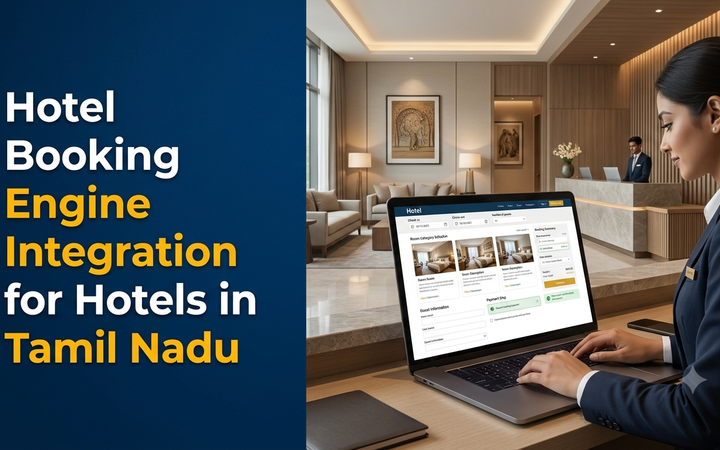
A booking engine can connect the hotel’s website to the PMS so that direct reservations and availability information are handled through a defined integration.
Online travel agency integrations
Hotels selling rooms through online travel agencies may require a channel manager or supported connectivity provider. Integration should handle availability, rates, reservation updates and cancellations with clear synchronisation rules.
Payment gateway integration
A payment gateway can support online advance payments or reservation deposits. The PMS should record transaction references and payment status, and handle failed or pending transactions correctly.
WhatsApp, SMS and email notifications
Notification integrations can send booking confirmations, reminders, payment updates and other approved guest communications. Message delivery depends on the provider, configuration and applicable consent requirements.
Accounting software
An accounting integration can help transfer invoice, payment and financial records into the hotel’s accounting workflow. The exact integration depends on the accounting application and the data it supports.
Door locks and other hotel devices
Some hotels may require electronic door-lock systems, POS terminals, barcode devices or other hardware. Compatibility must be verified with the device manufacturer or integration provider before development commitments are made.
Web-Based Hotel PMS and Mobile Applications
A web-based PMS can allow authorised hotel employees to access the system from supported computers, tablets and mobile browsers. This is useful for properties where the front desk, management office and housekeeping teams need shared operational information.
A hotel may choose the following interfaces:
- Admin web dashboard: Manage rooms, reservations, billing, staff, reports and settings.
- Front-desk interface: Handle bookings, guest arrivals, room allocation and payments.
- Housekeeping mobile interface: View assigned rooms and update cleaning or inspection status.
- Manager dashboard: Review operational reports and approve authorised changes.
- Guest booking interface: Optional website or mobile-friendly booking experience.
A dedicated Android or iOS application is not essential for every independent hotel. A responsive web application may be sufficient initially. Native mobile apps can be considered when offline capabilities, device features or specialised staff workflows justify the additional investment.
Security and Data Protection Considerations
A hotel PMS stores guest and business information, so security should be considered from the beginning of development.
- Role-based access control for front desk, housekeeping, managers and administrators.
- Secure authentication and appropriate session management.
- HTTPS encryption for data transmitted between users and the application.
- Secure storage of guest and business records.
- Regular database backups and tested restoration procedures.
- Audit logs for sensitive changes, discounts and billing adjustments.
- Restricted access to payment and guest information.
- Monitoring for errors, suspicious access and application availability.
- Documented data retention and deletion procedures.
A hotel application should not store raw payment-card details unless it has the required compliant infrastructure and a clearly justified need. Using a suitable payment provider’s hosted or tokenised payment flow can reduce the application’s exposure to sensitive card data.
Technology Stack for Hotel Property Management Software
The technology stack should be selected based on expected users, integration requirements, hosting needs, development budget and long-term maintenance.
| Layer | Possible technologies |
|---|---|
| Frontend | React, Next.js or another suitable web framework. |
| Backend | Laravel, Node.js or another maintainable backend framework. |
| Database | PostgreSQL or MySQL. |
| Mobile application | Flutter or native Android development, when required. |
| Hosting | Cloud server or managed hosting suited to application requirements. |
| Integrations | Payment, messaging, booking and accounting provider APIs. |
The most important architectural decision is to keep reservation, room availability, guest folio and payment records consistent. A booking system should also handle simultaneous reservation attempts safely so that the same room is not confirmed for overlapping stays.
How Much Does Hotel PMS Development Cost in India?
The development cost depends on the number of rooms, required modules, user roles, reporting requirements, integrations, mobile applications and the complexity of reservation rules.
The following figures are illustrative planning estimates for custom development in India. They are not fixed quotations, guaranteed market prices or a published Greap price list.
| Development scope | Illustrative estimate |
|---|---|
| Basic hotel room and reservation management | ₹30,000–₹50,000 |
| Reservation, room inventory and front desk | ₹45,000–₹80,000 |
| Guest records, check-in, check-out and billing | ₹60,000–₹1.1 lakh |
| Hotel PMS with housekeeping and reports | ₹75,000–₹1.4 lakh |
| Complete PMS with multiple operational modules | ₹1.2–₹2.5 lakh+ |
| Advanced PMS with mobile apps and external integrations | ₹2.5–₹5 lakh+ |
| Multi-property hotel management platform | ₹4–₹8 lakh+ |
Actual estimates should be prepared after defining the required modules, workflows, interfaces and integrations. Hosting, domain registration, SMS or WhatsApp provider charges, payment gateway fees, channel manager subscriptions, hardware, third-party licences, migration, taxes and ongoing maintenance may be additional.
How to Choose the Right Hotel Software Development Company
Choosing a development partner is an important part of a custom PMS project. Hotel owners should evaluate the proposed system against real front-desk and housekeeping workflows rather than relying only on a feature checklist.
Before finalising a development company, check the following:
- Does the team understand hotel reservations and room operations?
- Can it demonstrate a practical reservation and room-status workflow?
- Will the software prevent conflicting room assignments?
- Can the hotel configure room categories, rates and billing rules?
- Are user roles and access permissions included?
- Are reports and invoice formats aligned with operational needs?
- Can required payment, messaging or booking integrations be supported?
- Are backup, security and recovery procedures documented?
- Will the hotel receive source-code, deployment and documentation terms as agreed in the contract?
- Is post-launch support and maintenance clearly defined?
Ask for a demonstration using realistic hotel scenarios, such as a walk-in booking, an advance payment, a room change, a cancellation and a guest check-out. These workflows reveal practical usability issues that may not appear in a static feature list.
Hotel PMS Development for Independent Hotels in Tamil Nadu
Independent hotels in Tamil Nadu may have different operating requirements depending on their location, property size and guest profile. A business hotel, a highway lodge, a boutique property and a tourist accommodation provider may all need different reservation and service workflows.
Hotels in Erode and nearby areas such as Perundurai, Bhavani, Gobichettipalayam, Sathyamangalam and Chennimalai can consider a custom PMS that matches their room categories, front-desk processes and reporting requirements.
For example, one property may primarily need walk-in reservation management and billing, while another may need direct website bookings, housekeeping coordination and online travel agency connectivity. The software should be scoped around actual requirements instead of adding expensive modules that the hotel does not use.
For hotels planning to grow, the system can also be designed with a future path for additional rooms, properties, user roles and integrations. This allows the initial version to remain practical while supporting planned expansion.
Why Consider Custom Hotel PMS Development with Greap Technologies?
Greap Technologies provides website development, software development and digital growth services for businesses. For a hotel planning a custom property management platform, the development process can begin with understanding its existing reservation, front-desk, billing and housekeeping procedures.
A hotel PMS project can be planned around:
- Property-specific room and reservation workflows.
- Admin and staff dashboards.
- Guest and booking record management.
- Front-desk and housekeeping coordination.
- Billing and operational reports.
- Responsive web application development.
- Required third-party integrations.
- Deployment, testing and ongoing maintenance planning.
Planning a Hotel Property Management System?
Whether you operate an independent hotel, boutique property, lodge or small hotel group, the right software should simplify your daily operations and give your staff a clear view of reservations, rooms and guest services.
Discuss your hotel software requirements with Greap Technologies.
Website: www.greap.in
WhatsApp: Chat with Greap Technologies
Call: 70923 30168
Frequently Asked Questions About Hotel PMS Development
1. What is a Hotel Property Management System?
A Hotel Property Management System is software used to manage a hotel’s daily operations, including reservations, room availability, guest records, check-in, check-out, housekeeping, billing and reports.
2. Is a hotel PMS suitable for a small independent hotel?
Yes. A PMS can be designed for a small property with only the modules it needs, such as room management, reservations, front-desk operations and billing. Additional modules can be introduced as the hotel grows.
3. What is the difference between a hotel PMS and a booking engine?
A hotel PMS manages internal operations such as room allocation, guest records, check-in and billing. A booking engine allows guests to view availability and make reservations through the hotel’s website. The two systems can be integrated.
4. Can a custom hotel PMS manage walk-in reservations?
Yes. Staff can create walk-in reservations, check room availability, enter guest details, allocate rooms and record payments without requiring the guest to make an online booking.
5. Can hotel PMS software manage housekeeping?
Yes. A housekeeping module can assign cleaning tasks, track room status, record inspections and notify the front desk when a room is ready for allocation.
6. Can a hotel PMS integrate with online travel agencies?
It can, through a supported channel manager or direct integration where available. Compatibility, provider access, subscription charges and synchronisation capabilities should be checked before development.
7. Can hotel management software generate guest invoices?
Yes. A billing module can generate invoices based on room charges, additional services, applicable taxes, discounts and recorded payments. The invoice configuration should be reviewed against the hotel’s accounting and tax requirements.
8. Can hotel staff access the PMS from mobile devices?
A responsive web-based PMS can be accessed from supported mobile browsers. A dedicated Android or iOS application can also be developed if the hotel’s workflows require it.
9. How long does it take to develop a custom hotel PMS?
Development time depends on the number of modules, user interfaces, integrations and testing requirements. A basic system may take several weeks, while an advanced platform with mobile apps and external integrations can require several months. A realistic timeline should be prepared after the scope is finalised.
10. How much does custom hotel PMS development cost?
The cost depends on features, complexity, integrations and deployment requirements. As an illustrative planning range, a basic custom system may start around ₹30,000–₹50,000, while a more advanced platform can cost several lakh rupees. A detailed quotation requires a confirmed feature list and workflow review.
11. Can one PMS manage multiple hotel properties?
Yes. A multi-property PMS can support separate property records, room inventories, staff permissions and property-level reports, along with consolidated management reporting where required.
12. Should a hotel choose ready-made software or custom PMS development?
Ready-made software may be suitable when its features and pricing match the hotel’s requirements. Custom development is worth evaluating when the hotel needs specific workflows, tailored billing, specialised integrations or control over its application design and future features. The total cost of ownership should be compared before making a decision.