Ecommerce Website Development for D2C Brands in Tamil Nadu
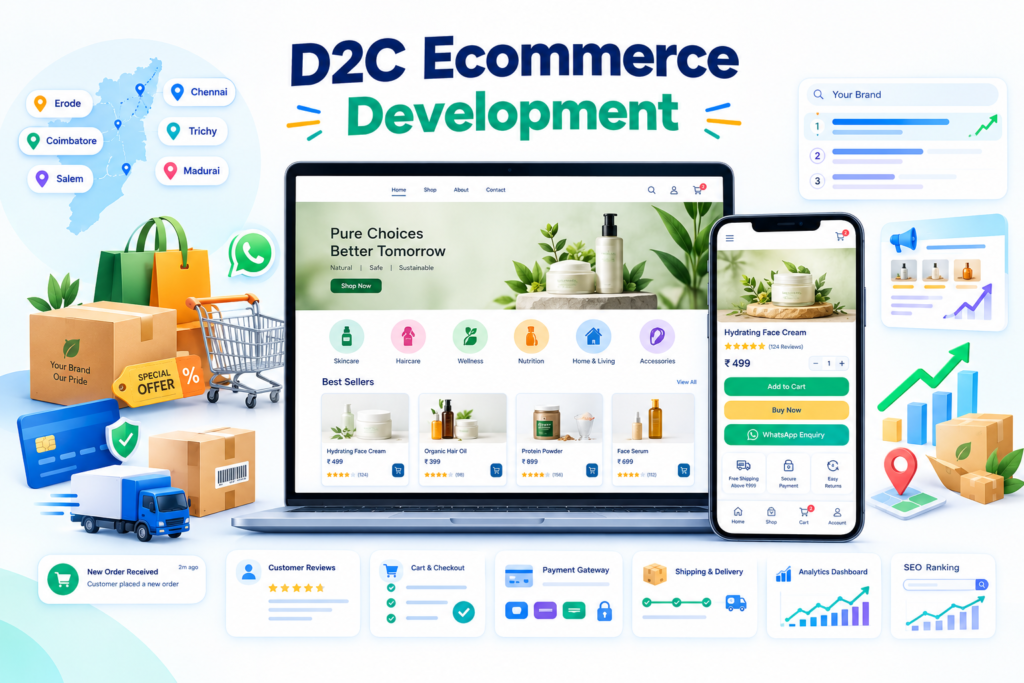
Ecommerce website development for D2C brands in Tamil Nadu helps product-based businesses sell directly to customers through their own online store instead of depending only on marketplaces, distributors, social media or physical retail channels.
D2C means Direct-to-Consumer. In this business model, brands sell their own products directly to customers through their ecommerce website and use channels such as Google, Instagram, Facebook, WhatsApp, email marketing, influencers and organic search to generate traffic and sales.
Whether you operate a clothing brand, skincare business, food brand, jewellery label, gift company, home décor business, textile brand, organic product company or startup, a professional ecommerce website gives your brand greater control over product presentation, customer experience, marketing and long-term digital growth.
At Greap Technologies, we provide ecommerce website development for D2C brands in Tamil Nadu, helping product brands create mobile-friendly, SEO-ready, conversion-focused and scalable online stores.
Quick Answer: Ecommerce Website Development for D2C Brands in Tamil Nadu
D2C ecommerce website development means building a brand-owned online store where customers can discover products, understand product benefits, add items to cart, complete checkout, make payments, track orders and communicate directly with the brand.
A professional D2C ecommerce website can include:
- Conversion-focused homepage
- Product category pages
- Detailed product pages
- Product variants
- Cart and checkout
- Payment gateway integration
- Cash on delivery where suitable
- Shipping configuration
- Order tracking
- Customer accounts
- WhatsApp integration
- Customer reviews
- Offers and coupons
- Product bundles
- SEO setup
- Google Analytics
- Advertising conversion tracking guidance
- Admin panel
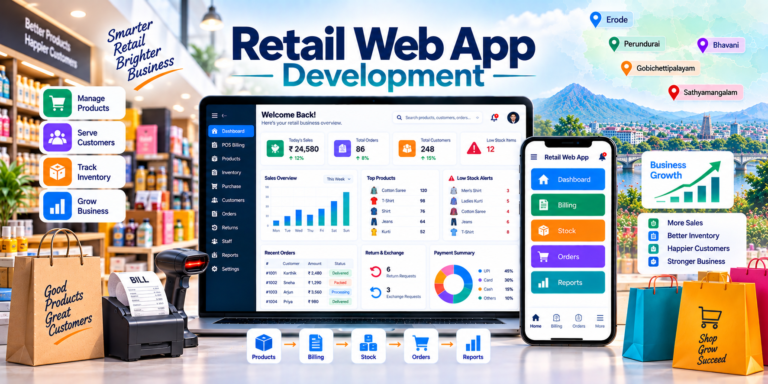
- Order and inventory management
The ideal D2C website should not simply look attractive. It should help customers understand the product, trust the brand and move smoothly from product discovery to checkout.
D2C Ecommerce Website Development in Tamil Nadu: Service Overview
| Detail | Information |
|---|---|
| Service | Ecommerce Website Development for D2C Brands |
| Company | Greap Technologies |
| Location | Tamil Nadu, India |
| Main Audience | Product brands, startups, manufacturers, Instagram sellers and online-first businesses |
| Main Goal | Build a brand-owned direct sales channel and generate online orders |
| Core Features | Products, cart, checkout, payments, shipping, reviews, tracking, SEO and admin management |
| Suitable For | Fashion, skincare, food, gifts, jewellery, textiles, home décor, organic products and consumer brands |
| Service Area | Erode, Chennai, Coimbatore, Tiruppur, Salem, Madurai, Trichy and across Tamil Nadu |
Why D2C Brands in Tamil Nadu Need Their Own Ecommerce Website
Many brands start selling through Instagram, WhatsApp, marketplaces or local retail stores. These channels can help acquire customers, but relying entirely on third-party platforms can limit control over the customer journey and brand experience.
1. Build a Brand-Owned Sales Channel
Your own ecommerce website gives your business control over:
- Brand design
- Product presentation
- Pricing
- Offers
- Checkout experience
- Content
- Customer communication
- Marketing landing pages
- Tracking setup
Marketplaces and social platforms can still remain part of the sales strategy, while the ecommerce website becomes the brand’s central digital property.
2. Build a Stronger D2C Brand Identity
A D2C website gives brands more space to communicate:
- Brand story
- Founder story
- Product benefits
- Brand values
- Manufacturing or sourcing process
- Customer testimonials
- Product education
- FAQs
- Policies
- Social proof
This helps customers understand why they should buy from your brand rather than comparing only on price.
3. Build First-Party Customer Relationships
When customers interact with your own store, the business can collect useful first-party information through orders, forms and account activity where appropriate and with suitable consent and privacy practices.
This may include:
- Customer contact details
- Order history
- Products purchased
- Customer location
- Average order value
- Repeat purchase behaviour
- Product preferences
This information can support customer service, retention campaigns, product decisions and marketing analysis.
4. Improve Paid Advertising Landing Experience
Meta Ads, Google Ads, creator campaigns and influencer promotions work better when customers arrive on a page that clearly matches the advertisement.
A D2C website can support:
- Product landing pages
- Collection campaigns
- Festival sale pages
- New product launches
- Bundle offers
- Retargeting journeys
- Campaign-specific tracking
The website itself does not guarantee better advertising results, but a clear, fast and relevant customer experience can support stronger campaign performance.
5. Build Organic Search Visibility
A D2C website creates opportunities to rank product pages, collection pages and educational content on Google.
SEO can help reduce complete dependency on paid traffic over time when supported by useful content, technical optimization and consistent search strategy.
Explore Greap SEO services.
Which D2C Brands Can Use Ecommerce?
Fashion and Clothing Brands
Fashion businesses can sell:
- Shirts
- T-Shirts
- Sarees
- Kurtis
- Dresses
- Kidswear
- Ethnic Wear
- Activewear
- Boutique Collections
Skincare and Beauty Brands
Beauty businesses can sell skincare, haircare, cosmetics, grooming and personal-care products directly to customers.
Food Product Brands
D2C food brands can sell:
- Snacks
- Millet products
- Masala
- Pickles
- Sweets
- Ready-to-cook products
- Health foods
- Traditional food products
Home Décor and Gift Brands
Gift and décor businesses can sell wall décor, frames, lamps, personalized products, 3D-printed gifts and occasion-based gift collections.
Jewellery Brands
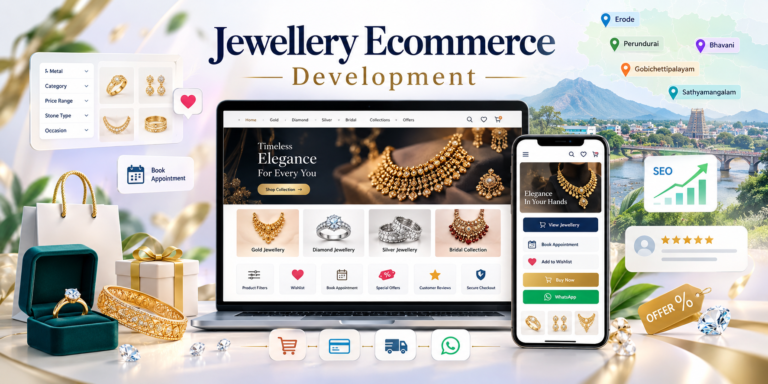
Fashion, imitation and suitable jewellery products can be sold through collection-based ecommerce stores.
Organic and Natural Product Brands
Organic brands can sell millets, cold-pressed oils, natural foods, herbal products and eco-friendly consumer goods.
Textile and Home Textile Brands
Textile businesses can directly sell sarees, garments, fabrics, bedsheets, towels, curtains and home furnishing products.
Manufacturers Moving into D2C
Manufacturers that traditionally sell through dealers or wholesalers can create a separate D2C channel for selected consumer-ready products while continuing their existing B2B model.
Instagram-First Brands
Brands that currently manage sales manually through Instagram DMs or WhatsApp can use an ecommerce website to structure product discovery, checkout, payments and order management.
Important Features of a D2C Ecommerce Website
1. Conversion-Focused Homepage
The homepage should quickly answer three questions:
- What does the brand sell?
- Why should the customer care?
- What should the customer do next?
Useful homepage sections include:
- Hero banner
- Best sellers
- Featured collections
- Product benefits
- New arrivals
- Current offers
- Brand story
- Customer reviews
- Social proof
- Delivery information
- WhatsApp support
- FAQ
2. Product Category Pages
Category pages should help users browse products quickly while also supporting SEO.
Examples include:
- New Arrivals
- Best Sellers
- Collections
- Offers
- Combo Packs
- Category-Specific Products
3. High-Converting Product Pages
Product pages are among the most important conversion pages for a D2C brand.
A strong product page can include:
- Product title
- High-quality images
- Product videos
- Price
- Offer price
- Variants
- Quantity selector
- Key benefits
- Detailed description
- Ingredients or materials where relevant
- Usage instructions
- Delivery estimate
- Returns information
- Customer reviews
- Product FAQs
- Add to Cart
- Buy Now
- WhatsApp support
- Related products
4. Product Reviews and User-Generated Content
Social proof can include:
- Verified customer reviews where supported
- Photo reviews
- Video testimonials
- Customer usage images
- Creator content with permission
Only genuine customer feedback and authorized content should be displayed.
5. Cart and Checkout
A D2C checkout should be simple and mobile-friendly.
Typical checkout information includes:
- Name
- Phone number
- Shipping address
- Order summary
- Coupon
- Shipping charge
- Payment method
- Order confirmation
6. Payment Gateway Integration
A suitable payment provider can enable supported payment methods such as UPI, cards and net banking.
Cash on delivery may also be offered depending on the brand’s product type, shipping operations and risk-management process.
7. Shipping and Delivery Setup
Shipping functionality can include:
- Shipping zones
- Delivery charges
- Free shipping threshold
- COD rules
- Estimated delivery information
- Courier integration where required
- Order tracking
- Pickup where applicable
8. WhatsApp Integration
WhatsApp can support:
- Product questions
- Size enquiries
- Order support
- Custom product enquiries
- Delivery questions
- Customer service
A WhatsApp click should be measured separately from a completed order unless the business can verify the final conversion.
9. Admin Panel
The ecommerce admin area should make daily management easier.
Useful modules include:
- Products
- Categories
- Variants
- Pricing
- Offers
- Coupons
- Inventory
- Orders
- Customers
- Reviews
- Banners
- Shipping
- Payments
- Blog
- Reports
Best Website Structure for D2C Brands
General D2C Brand
- Home
- Shop
- Categories
- Best Sellers
- New Arrivals
- Offers
- About Brand
- Reviews
- Blog
- Track Order
- Contact
Fashion D2C Brand
- Home
- Shop
- Men
- Women
- Kids
- New Arrivals
- Best Sellers
- Size Guide
- Offers
- About
- Contact
Beauty and Skincare Brand
- Home
- Shop
- Shop by Concern
- Product Range
- Ingredients
- Routine Guide
- Reviews
- Blog
- About
- Contact
Food Brand
- Home
- Products
- Best Sellers
- Combo Packs
- Ingredients
- Quality
- Recipes
- Reviews
- About
- Contact
D2C Ecommerce Website Design Style
| D2C Brand Type | Recommended Design Direction |
|---|---|
| Fashion Brand | Stylish, clean and visual |
| Skincare Brand | Soft, premium and trust-focused |
| Food Brand | Fresh, warm and product-focused |
| Gift Brand | Emotional, premium and occasion-focused |
| Jewellery Brand | Elegant, minimal and premium |
| Organic Brand | Natural, clean and wellness-focused |
| Home Décor Brand | Lifestyle-focused and visual |
| Startup Brand | Modern, sharp and conversion-focused |
SEO Strategy for D2C Ecommerce Websites in Tamil Nadu
Ecommerce website development for D2C brands in Tamil Nadu should include SEO planning from the beginning rather than treating SEO as something added after launch.
Important SEO elements include:
- Keyword research
- SEO-friendly URLs
- Product SEO
- Category SEO
- Meta titles
- Meta descriptions
- Image ALT text
- Internal linking
- Breadcrumbs
- Structured data where appropriate
- Blog content
- XML sitemap
- Google Search Console
- Google Analytics
- Technical performance optimization
Example D2C Ecommerce Keywords
- D2C ecommerce website development in Tamil Nadu
- D2C website development company in Tamil Nadu
- ecommerce website development for brands in Tamil Nadu
- Shopify development for D2C brands
- online store development for startups
- direct to consumer ecommerce website development
- product brand ecommerce website development
Product SEO
Product pages should contain useful, unique information rather than manufacturer descriptions copied across multiple websites.
Category SEO
Important product collections can target category-level searches while helping customers understand the collection.
Blog SEO
Useful educational content can attract users earlier in the buying journey and internally link them toward products and collections.
Blog Ideas for D2C Brands
- How to Choose the Right Product for Your Needs
- Benefits of Buying Directly from the Brand
- How to Use Our Product
- Product Care Guide
- Behind the Brand Story
- Ingredient or Material Guide
- Product Comparison Guide
- Gift Buying Guide
- Customer Stories
- How Our Products Are Made
D2C Ecommerce Conversion Rate Optimization
Getting traffic is only one part of ecommerce growth. The website should also make it easy for customers to decide and buy.
Conversion-focused improvements can include:
- Clear product benefits
- Strong product imagery
- Visible CTA buttons
- Mobile-friendly layouts
- Simple navigation
- Easy checkout
- Trust information
- Reviews
- Delivery information
- Clear return policies
- Relevant offers
- Fast page loading
Conversion rate depends on many factors including traffic quality, product-market fit, pricing, trust, creative, offer, website experience and competition.
D2C Ecommerce Sales Funnel
A typical customer journey can look like:
Meta Ads / Google / Instagram / Influencer → Landing Page or Product Page → Product Evaluation → Add to Cart → Checkout → Purchase → Delivery → Repeat Purchase
Another journey may be:
Organic Google Search → Blog → Product Category → Product Page → Purchase
Useful ecommerce events can include:
- Product view
- Collection view
- Add to cart
- Checkout started
- Purchase
- Search
- WhatsApp click
- Coupon use
D2C Ecommerce Tracking and Analytics
Tracking should be planned during development so the brand can understand what happens after visitors arrive on the website.
Tracking may include:
- Google Analytics
- Google Ads conversion tracking
- Meta advertising tracking integration guidance
- Product-view events
- Add-to-cart events
- Checkout events
- Purchase events
- WhatsApp interactions
Tracking implementation should respect applicable privacy requirements, consent choices and platform policies.
D2C Landing Pages for Paid Advertising
Sending every advertisement to the homepage is not always the best approach.
Brands can create landing pages for:
- New Product Launch
- Best Seller
- Festival Sale
- Combo Offer
- Influencer Campaign
- Collection Launch
- Google Ads Campaign
- Meta Ads Campaign
A strong D2C landing page can include:
- Clear product headline
- Product visuals
- Main benefits
- Offer details
- Customer reviews
- Delivery information
- Trust elements
- Product FAQ
- Buy Now CTA
Greap Technologies also provides digital marketing services for brands that need help generating and measuring ecommerce traffic.
D2C Customer Retention Strategy
D2C growth should not depend only on acquiring new customers.
Depending on the business and customer consent, retention systems can include:
- Email campaigns
- WhatsApp customer communication
- Repeat-order reminders
- Loyalty programmes
- Referral rewards
- Personalized offers
- New-launch communication
- Review requests
Retention strategies are particularly valuable for products with repeat-purchase potential.
Admin Panel Features for D2C Ecommerce Websites
| Module | Purpose |
|---|---|
| Dashboard | View store performance and important activity |
| Products | Manage products and descriptions |
| Categories | Manage collections |
| Variants | Manage size, colour and other options |
| Pricing | Manage prices and offers |
| Inventory | Manage stock |
| Orders | Process ecommerce orders |
| Customers | Manage customer information |
| Coupons | Create promotional offers |
| Reviews | Manage approved customer feedback |
| Shipping | Manage shipping rules |
| Content | Update banners and website content |
| Reports | Review sales and product activity |
Advanced Features for Growing D2C Brands
- Wishlist
- Repeat order
- Subscription products
- Product bundles
- Combo offers
- Abandoned-cart workflows
- Loyalty points
- Referral programmes
- Customer segmentation
- Product recommendations
- Influencer coupon codes
- Review automation
- Email marketing integration
- WhatsApp integration
- Inventory alerts
- Advanced analytics dashboard
- Multiple warehouses
- Mobile app integration
Advanced features should be added based on actual customer behaviour and business needs rather than simply increasing the number of features.
Shopify vs WooCommerce vs Custom Ecommerce for D2C Brands
| Platform | Best For | Key Strength |
|---|---|---|
| Shopify | Brands wanting a commerce-focused hosted platform | Fast ecommerce setup and straightforward store management |
| WooCommerce | Brands combining WordPress content and ecommerce | Flexible content and ecommerce ecosystem |
| Custom Ecommerce | Brands with unique workflows or integrations | Can be designed around specific business requirements |
| Headless Ecommerce | Brands needing custom frontend experiences | Greater frontend flexibility with additional technical complexity |
The best platform depends on catalogue size, product complexity, team skills, integrations, budget, marketing requirements and future growth.
Explore Greap ecommerce development services.
D2C Ecommerce Website Development Process
Step 1: Brand and Business Analysis
Important questions include:
- What products do you sell?
- Who is your ideal customer?
- How many products are there?
- Do products have variants?
- Which locations do you ship to?
- Do you need COD?
- Do you need WhatsApp support?
- Will you run paid ads?
- Do you need SEO?
- Which ecommerce platform is suitable?
Step 2: Ecommerce Architecture
Plan:
- Product categories
- Navigation
- Product pages
- Cart
- Checkout
- Customer account
- Offers
- Content
- SEO structure
Step 3: UI/UX Design
The website should reflect the brand while keeping product discovery and checkout easy.
Step 4: Ecommerce Development
Development can include:
- Homepage
- Collections
- Product pages
- Filters
- Cart
- Checkout
- Payments
- Shipping
- Customer accounts
- Admin management
Step 5: Product Data Setup
Product information can include:
- Name
- Category
- Price
- Offer price
- Variants
- Description
- Benefits
- Images
- Videos
- SKU
- Stock
Step 6: SEO and Tracking Setup
This can include:
- SEO titles
- Meta descriptions
- Image ALT text
- Sitemap
- Search Console
- Analytics
- Conversion tracking guidance
- Product-event tracking
- WhatsApp click tracking
Step 7: Ecommerce Testing
Before launch, test:
- Mobile layout
- Desktop layout
- Product variants
- Product filters
- Cart
- Checkout
- Payment flow
- Coupons
- Shipping
- COD rules
- Order confirmation
- Analytics
- SEO metadata
- Page performance
D2C Ecommerce Website Features Checklist
| Feature | Recommendation |
|---|---|
| Professional Homepage | Required |
| Mobile Responsive Design | Required |
| Category Pages | Required |
| Product Pages | Required |
| Product Variants | Based on products |
| Cart & Checkout | Required |
| Payment Gateway | Required for online payments |
| Shipping Setup | Required |
| Cash on Delivery | Based on business model |
| Customer Reviews | Recommended |
| WhatsApp Support | Recommended |
| Customer Accounts | Based on requirement |
| Order Management | Required |
| Inventory Management | Required |
| Coupons & Offers | Recommended |
| Blog | Recommended |
| SEO Setup | Required |
| Google Analytics | Recommended |
| Advertising Tracking | Recommended for paid campaigns |
| Admin Panel | Required |
Common D2C Ecommerce Mistakes to Avoid
1. Depending Only on Social Media
Social platforms are useful acquisition channels, but brands benefit from having their own ecommerce destination as well.
2. Poor Product Photography
Customers cannot physically inspect products online, so strong visuals are important.
3. Weak Product Pages
Explain benefits, usage, specifications and important buying information clearly.
4. Complicated Checkout
Remove unnecessary friction from the purchase journey.
5. Poor Mobile Experience
Product pages, cart and checkout should work smoothly on smartphones.
6. Missing Trust Information
Contact details, genuine reviews, policies and secure payment information can improve confidence.
7. No Conversion Tracking
Brands should understand which campaigns and products are contributing to meaningful ecommerce actions.
8. No SEO Strategy
Paid advertising and organic search can complement each other instead of relying entirely on one channel.
9. Slow Website
Optimize images, scripts and unnecessary functionality to support better performance.
10. No Retention Strategy
For repeat-purchase products, customer retention can be an important part of sustainable D2C growth.
Tamil Nadu D2C Ecommerce Strategy
Greap Technologies supports D2C brands across Tamil Nadu, including businesses in:
Erode, Chennai, Coimbatore, Tiruppur, Salem, Madurai, Tiruchirappalli, Namakkal, Karur, Dindigul, Theni, Tirunelveli, Hosur, Vellore, Thanjavur, Pollachi and other locations.
For statewide SEO, businesses should focus primarily on their products, customer search intent and real delivery/service coverage rather than creating large numbers of near-identical city pages.
Location pages can be useful where they contain genuinely different information, such as:
- Local availability
- Delivery information
- Regional product demand
- Local case studies
- Unique FAQs
- Relevant customer examples
How Greap Technologies Helps D2C Brands in Tamil Nadu
Greap Technologies helps product brands plan and build ecommerce websites around actual sales, marketing and operational requirements.
Our D2C ecommerce development services can include:
- D2C ecommerce strategy
- Store architecture
- UI/UX design
- Homepage development
- Collection pages
- Product page development
- Product variants
- Cart and checkout
- Payment gateway integration
- Shipping setup
- COD configuration
- WhatsApp integration
- Customer reviews
- Coupons and promotions
- Product bundles
- Order management
- Inventory management
- Admin panel
- Shopify development
- WooCommerce development
- Custom ecommerce development
- Landing page development
- SEO-friendly structure
- Product SEO
- Category SEO
- Analytics setup
- Conversion tracking guidance
- Website maintenance
Useful Greap services:
- Ecommerce Development
- Website Development Services
- SEO Services
- Digital Marketing Services
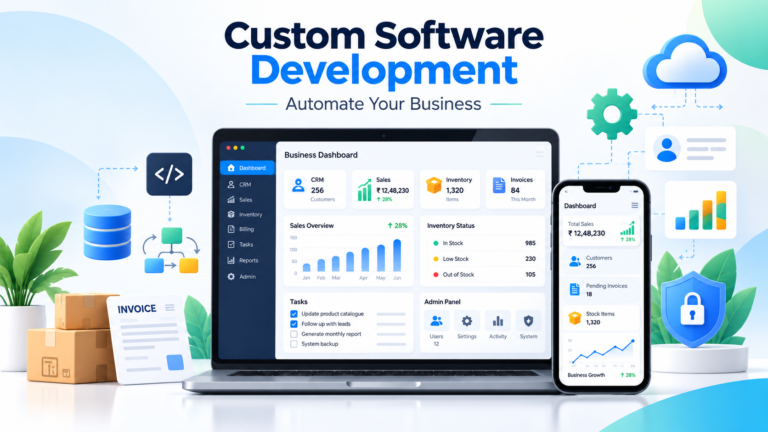
- Custom Software Development
Why Choose Greap Technologies?
D2C-Focused Ecommerce Planning
We plan the website around product discovery, conversions, marketing campaigns, customer retention and brand experience.
Mobile-First Ecommerce Design
D2C customers frequently arrive from social media and advertising on mobile devices, so mobile shopping is treated as a priority.
SEO-Friendly Development
Product pages, collections, content and technical structure can be planned with organic search visibility in mind.
Conversion and Tracking Focus
We can structure Add to Cart, Buy Now, checkout, WhatsApp and analytics events around meaningful customer actions.
Shopify, WooCommerce and Custom Support
The platform can be selected according to catalogue size, features, content strategy, operations, integrations and growth plans.
Complete Digital Growth Support
Greap Technologies can also support SEO, Google Ads, Meta Ads, landing pages and digital marketing after launch.
Conclusion
Ecommerce website development for D2C brands in Tamil Nadu can help product businesses create a brand-owned online sales channel, present products professionally, run marketing campaigns, collect direct orders and build stronger customer relationships.
A strong D2C ecommerce website should combine attractive branding with fast product pages, simple checkout, reliable payment and shipping workflows, customer reviews, SEO, analytics and mobile-friendly design.
The website should also match the brand’s growth stage. Early-stage brands may start with Shopify or WooCommerce and a focused product catalogue, while larger brands may later need advanced automation, custom ecommerce, integrations, loyalty programmes and mobile applications.
Greap Technologies helps D2C brands across Tamil Nadu build ecommerce websites around their products, marketing strategy and long-term growth requirements.
Need an Ecommerce Website for Your D2C Brand in Tamil Nadu?
Greap Technologies can help you build a professional D2C ecommerce website with product pages, cart, checkout, payment gateway, shipping, WhatsApp support, SEO, analytics and admin management.
Frequently Asked Questions
1. Why do D2C brands in Tamil Nadu need an ecommerce website?
A brand-owned ecommerce website can help D2C businesses sell directly, control product presentation, build customer relationships, support marketing campaigns and reduce complete dependence on third-party platforms.
2. What should a D2C ecommerce website include?
A D2C website can include product categories, product pages, cart, checkout, payment integration, shipping, customer reviews, WhatsApp support, order management, SEO, analytics and an admin panel.
3. Can D2C brands sell directly through their own website?
Yes. Brands can sell directly through product pages, cart, checkout, payment gateway and shipping integrations.
4. Which platform is suitable for D2C ecommerce?
Shopify can work well for commerce-focused stores, WooCommerce can suit WordPress-based content and ecommerce businesses, while custom development can support specialized workflows and integrations.
5. Is SEO important for D2C brands?
Yes. SEO can help product pages, categories and useful brand content build organic search visibility over time.
6. Can WhatsApp be connected to a D2C website?
Yes. WhatsApp can be used for product enquiries, order support, size questions, delivery assistance and other customer-service interactions.
7. Can a D2C website support Meta Ads and Google Ads?
Yes. Ecommerce websites can be configured with appropriate analytics and advertising tracking integrations to support campaign measurement, subject to platform and privacy requirements.
8. Can D2C brands offer cash on delivery?
Yes. COD can be configured when it suits the brand’s products, courier process, delivery coverage and risk-management strategy.
9. Can Greap Technologies build D2C ecommerce websites across Tamil Nadu?
Yes. Greap Technologies provides ecommerce website development for D2C brands across Tamil Nadu, including store design, product pages, checkout, payments, shipping, SEO, tracking guidance and responsive development.
10. Can a D2C ecommerce website help increase sales?
A professionally planned ecommerce website can improve product discovery, customer trust and purchase convenience, creating more opportunities for online sales when supported by the right products, pricing, offers, traffic and marketing strategy.