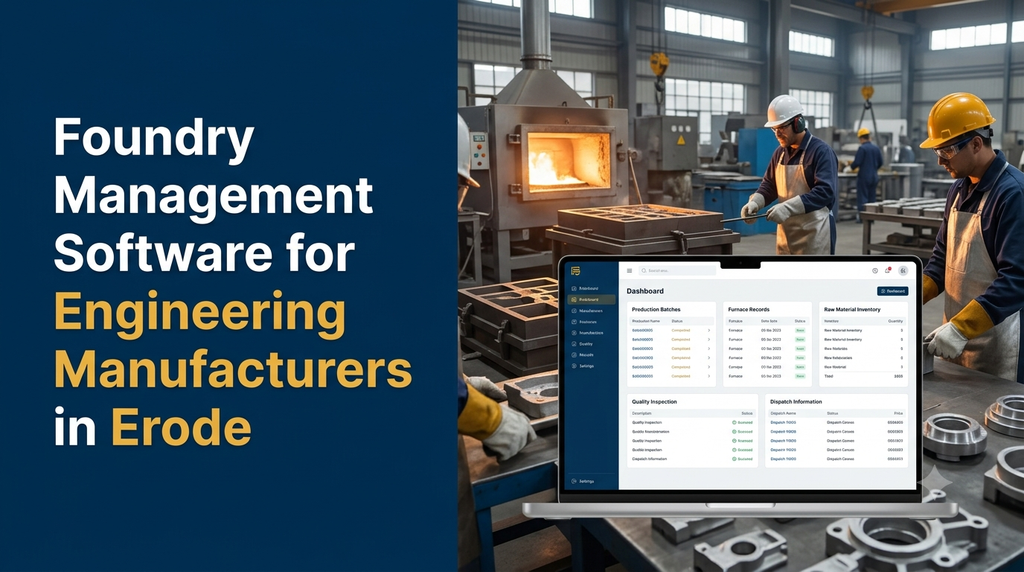
Foundry management software helps engineering manufacturers coordinate metal casting operations, raw material consumption, furnace records, moulding, production tracking, quality inspections, inventory and dispatch through a centralised digital system. For foundries in Erode, a properly designed solution can improve production visibility, maintain batch records and make operational information easier to use for planning and decision-making.
What Is Foundry Management Software?
Foundry management software is a digital system designed to manage the operational and business activities of a metal casting facility. It records information from raw material purchase through melting, mould preparation, pouring, cooling, finishing, inspection and final delivery.
Instead of maintaining disconnected registers and spreadsheets, a foundry can use a shared application to connect production, stores, quality, sales and accounts. Each department can access the information relevant to its responsibilities, subject to assigned user permissions.
A foundry may need a simple production and inventory application or a more comprehensive engineering ERP system. The right scope depends on its casting process, number of production lines, order volume, reporting requirements and existing equipment.
Why Do Engineering Foundries in Erode Need Digital Management?
Foundry operations involve multiple connected activities. A change in material availability, production scheduling, melting records or quality status can affect delivery commitments and manufacturing costs. When information is spread across paper records and separate files, managers may find it difficult to obtain a consistent view of current operations.
A digital system can help manufacturers with:
- Centralised purchase, supplier and raw material records.
- Furnace-wise and shift-wise production visibility.
- Heat, batch and casting traceability.
- Structured quality inspection and rejection records.
- Inventory visibility for raw materials and finished castings.
- Job-wise production planning and delivery tracking.
- More consistent material consumption and costing records.
- Management reports based on recorded operational data.
Foundries around Erode and the wider Tamil Nadu industrial region can evaluate these capabilities according to their own production model. Software requirements should be based on the actual plant process, rather than assuming every foundry operates in the same way.
Essential Modules in Foundry Management Software
1. Raw Material and Supplier Management
Foundries use different materials depending on the casting process and product specification. A material management module can record supplier details, purchase orders, receipts, inspection status, stock quantities and issue transactions.
- Supplier and vendor master records.
- Material categories, grades and specifications.
- Purchase orders and goods receipt records.
- Supplier invoices and purchase history.
- Material issue and return transactions.
- Reorder alerts based on configured stock limits.
Depending on the operation, materials may include pig iron, scrap, ferroalloys, aluminium ingots, additives, foundry sand, binders and consumables. The system should allow configurable material categories rather than forcing every business into a fixed list.
2. Charge Material and Composition Records
Charge preparation is an important part of melting operations. Software can record the materials assigned to a heat, planned quantities, actual quantities and relevant material specifications.
A configurable charge record can include the heat reference, furnace, material grade, input quantities, operator, shift and approval status. Where chemical composition testing is performed, laboratory results can be linked to the corresponding heat or batch.
The software should store approved process specifications supplied by the manufacturer’s technical team. It should not independently decide metallurgical formulas or replace qualified process engineering.
3. Furnace and Melting Management
Furnace management records help supervisors understand which melting activities were completed during each shift. A custom application can maintain furnace-wise production history and connect melting records with material consumption and downstream casting batches.
- Furnace identification and operating status.
- Heat number and production reference.
- Planned and actual input quantities.
- Start and completion timestamps.
- Operator and shift details.
- Recorded temperature and process observations.
- Melting output and recorded losses.
- Maintenance and downtime references.
Temperature readings and equipment data can be entered manually or imported through compatible devices and integrations. Automatic monitoring should only be promised after checking the furnace controls, sensors, communication protocols and plant network.
4. Moulding and Core Preparation Management
Moulding and core preparation records help production teams track the readiness of casting jobs. The application can connect customer orders and production plans with patterns, moulds, cores and required quantities.
- Pattern and tooling reference records.
- Moulding job and batch details.
- Core preparation and issue records.
- Sand and consumable usage entries.
- Production status and pending quantities.
- Rework and mould rejection records.
Pattern maintenance history can also be maintained to help teams identify tools that require inspection or repair.
5. Pouring, Cooling and Casting Batch Tracking
Once molten metal is poured into prepared moulds, the resulting casting batch needs to be connected with the relevant production records. A batch-tracking module can maintain references between the heat, moulding job, pouring activity and resulting castings.
Useful records include:
- Heat number and casting batch number.
- Customer order and product reference.
- Pouring date, time and shift.
- Recorded operator and supervisor details.
- Quantity poured and quantity recovered.
- Cooling and knockout status.
- Batch movement to finishing or inspection.
Barcode or QR-based identification can make it easier to retrieve batch information when labels are suitable for the plant environment.
6. Quality Control and Inspection Management
Casting quality depends on the material, process, design and inspection requirements of each product. A quality management module can store inspection plans, test results, acceptance decisions and non-conformance records.
- Incoming material inspection.
- Heat-wise chemical composition results.
- Dimensional inspection records.
- Hardness and other applicable test results.
- Visual inspection and defect classification.
- Rejection, rework and scrap records.
- Customer-specific inspection requirements.
- Inspection approvals and supporting attachments.
Where a foundry uses external laboratories or specialised testing equipment, the application can store uploaded reports or integrate with compatible systems. It should preserve the source and date of each inspection result.
7. Casting Defect and Rejection Analysis
Recording rejection reasons in a consistent format helps manufacturers review recurring production problems. The software can categorise defects based on the foundry’s approved quality terminology.
Reports may group rejection quantities by product, batch, heat, machine, shift, defect category or inspection stage. These reports help quality teams investigate patterns, but they do not automatically establish the technical cause of a defect.
8. Finishing, Fettling and Machining Management
Many engineering castings require additional processing before they are ready for delivery. The application can track movement through cutting, grinding, fettling, shot blasting, machining and other finishing stages.
- Operation-wise production routing.
- Work-in-progress quantities.
- Machine and work-centre assignments.
- Operator and shift records.
- Rework and pending operation status.
- Final inspection and production completion.
9. Finished Goods and Warehouse Management
After inspection and approval, finished castings can be moved into warehouse stock. Inventory records should distinguish available, reserved, rejected and pending-inspection quantities.
- Product-wise and batch-wise stock.
- Warehouse and storage-location records.
- Stock transfers and adjustments.
- Customer order reservations.
- Dispatch-ready quantity reports.
- Barcode or QR label support where appropriate.
10. Sales Orders, Billing and Dispatch
A sales and dispatch module connects customer requirements with production and inventory. Teams can view order quantities, delivery commitments, production status and dispatch progress.
- Customer and product master records.
- Quotation and sales order management.
- Order-wise production status.
- Delivery schedules and pending quantities.
- Dispatch notes and transport details.
- Invoice references and payment status.
If accounting or tax invoicing is required, the scope should clearly define whether the foundry application will include those functions or connect to an existing accounting system.
11. Foundry Costing and Material Yield Reports
Foundry costing requires more than the purchase price of metal. Depending on the manufacturer’s costing method, a system can collect material, labour, energy, consumable, finishing, machining and overhead records.
A configurable costing report may include:
- Raw material issue value.
- Recorded material consumption and output.
- Production labour and shift costs.
- Power and fuel cost entries.
- Consumables and finishing expenses.
- Rework and rejection-related costs.
- Job-wise estimated and actual cost comparisons.
The accuracy of these reports depends on the quality and completeness of the underlying entries and the costing rules approved by the business.
How Does a Foundry Management System Work?
A typical workflow connects each stage of the manufacturing process. The exact sequence varies according to the metal, casting method and product requirements.
- Customer order: Record the product, specification, quantity and expected delivery date.
- Production planning: Create a job or production schedule based on available capacity and material.
- Material preparation: Check stock and record materials issued for the planned heat.
- Melting: Create furnace and heat records with relevant process observations.
- Moulding: Record pattern, mould and core preparation status.
- Pouring and cooling: Link casting batches to their heat and production references.
- Finishing: Track work-in-progress through required finishing operations.
- Quality inspection: Record test results and acceptance or rejection status.
- Inventory: Move approved castings into finished goods stock.
- Dispatch: Connect delivery records with customer orders and invoices.
Important Reports and Dashboard Features
A useful foundry dashboard should present information that managers and supervisors can act on. The system can provide reports such as:
| Report | Information displayed |
|---|---|
| Production summary | Planned quantity, completed quantity and pending jobs. |
| Furnace-wise report | Heat records, output, shifts and downtime entries. |
| Material consumption | Material issued, recorded usage and remaining stock. |
| Quality report | Inspection status, defects, rejection and rework. |
| Batch traceability | Links between orders, heats, casting batches and inspections. |
| Inventory report | Raw materials, work-in-progress and finished goods. |
| Costing report | Recorded job costs and configured cost comparisons. |
| Dispatch report | Delivered, pending and scheduled customer orders. |
Advanced Features for Modern Foundries
Barcode and QR Code Traceability
Labels can connect material lots, heat references, casting batches and finished products with their digital records. Label design and printing should be tested against heat, dust, handling and other site conditions.
Mobile Applications for Production Teams
A mobile application can allow authorised staff to enter production updates, record inspection outcomes, check assigned tasks and review selected reports. Offline entry may be useful in areas with unreliable connectivity, provided the application includes a clear synchronisation and conflict-handling process.
Machine and Weighing Equipment Integration
Compatible weighing scales, sensors, PLC systems or production equipment may provide data to the software through supported interfaces. Each integration requires a technical assessment of device models, protocols, network access, data formats and safety restrictions.
Alerts and Approval Workflows
The system can notify relevant users about low stock, pending inspections, overdue production stages, delayed orders and approval requests. Notifications can be configured through the web application, mobile app, email or supported messaging services.
Management Analytics
Dashboards can combine production, inventory, quality and order data. Managers can filter reports by date, product, customer, furnace, shift or production batch, depending on the configured data structure.
Web-Based Foundry Software vs Traditional Registers
| Business activity | Disconnected manual records | Centralised software |
|---|---|---|
| Production updates | Separate registers and spreadsheets. | Shared production records and status views. |
| Material stock | Manual consolidation may be needed. | Recorded receipts, issues and balances. |
| Batch traceability | Information may be spread across documents. | Linked heat, batch and inspection references. |
| Quality history | Separate test sheets and files. | Centralised inspection records and attachments. |
| Management reports | May require manual preparation. | Reports generated from recorded transactions. |
| User access | Paper circulation and shared files. | Role-based access and activity records. |
Software does not automatically guarantee error-free records. Staff training, clear procedures, validation rules and regular review are necessary for reliable operational data.
How Much Does Foundry Management Software Development Cost?
The development cost depends on the number of modules, workflow complexity, user roles, reporting requirements, mobile access, equipment integrations and migration of existing data. A focused application covering production and inventory will usually require a different budget from a multi-department manufacturing ERP.
The following figures are illustrative planning ranges for discussing project scope in India. They are not fixed Greap quotations or guaranteed market prices.
| Software scope | Illustrative planning range |
|---|---|
| Basic purchase, stock and production entry | ₹30,000–₹55,000 |
| Raw material and furnace-wise records | ₹50,000–₹85,000 |
| Production, batch and quality tracking | ₹75,000–₹1.3 lakh |
| Production, inventory, sales and costing | ₹1.1 lakh–₹2 lakh |
| Multi-module foundry ERP | ₹1.8 lakh–₹3.5 lakh+ |
| Advanced system with mobile apps and equipment integrations | ₹3 lakh–₹7 lakh+ |
Actual quotations should be prepared only after reviewing requirements, screens, user roles, reports, integrations and deployment expectations. Hosting, hardware, PLC or gateway equipment, barcode printers, paid third-party services, data migration, taxes and ongoing maintenance may add to the project cost.
How to Choose the Right Foundry Software Development Company
A foundry should evaluate a software partner based on its ability to understand the manufacturing process and translate it into practical workflows. Consider the following points before selecting a development team:
- Process understanding: Can the team map your purchase, melting, casting, finishing and inspection workflows?
- Customisation: Can fields, approvals and reports match your actual foundry operations?
- Traceability: Can the system connect customer orders, heats, batches and inspection records?
- Ease of use: Can production staff use the application with minimal unnecessary data entry?
- Reporting: Can managers obtain useful operational reports without repeatedly combining spreadsheets?
- Integration capability: Can the team assess your existing equipment and third-party software before promising integrations?
- Data security: Are backups, access permissions, audit logs and recovery procedures included in the plan?
- Support: Is there a defined process for bug fixes, updates, training and future improvements?
Why Consider Custom Foundry Software Development in Erode?
Ready-made manufacturing products may cover common business functions, but a foundry may have specific requirements for heat tracking, material composition, casting routes, inspection stages, customer specifications or costing.
Custom software development allows these workflows to be documented and implemented around the manufacturer’s operations. It can also support phased development: beginning with purchase, inventory and production records, then adding quality, costing, mobile applications and integrations as requirements become clearer.
Greap Technologies provides website, software and digital growth solutions for businesses. For an engineering manufacturer, a software project can begin with a workflow discussion, module list, user roles, reporting requirements and a practical development plan.
Frequently Asked Questions
1. What is foundry management software used for?
It is used to manage foundry activities such as raw material purchasing, inventory, furnace and heat records, moulding, casting production, quality inspection, costing and dispatch.
2. Can foundry software track furnace-wise production?
Yes. A custom system can maintain furnace-wise heat records, shift details, production quantities, timestamps, material consumption and downtime entries. Automatic equipment data collection depends on compatible hardware and integration.
3. Can the software track heat numbers and casting batches?
Yes. Heat numbers can be linked with charge materials, pouring activities, casting batches, inspection reports and dispatch records. This creates a searchable production history when the relevant data is recorded consistently.
4. Does foundry ERP software support quality control?
It can store inspection plans, test results, dimensional checks, defect categories, rejection records, rework status and approval history. The exact quality workflow can be configured for the products and tests used by the foundry.
5. Can foundry management software calculate production costs?
It can collect material, labour, energy, consumable, finishing and overhead entries and calculate costs using configured business rules. Reliable results depend on accurate data and an agreed costing method.
6. Can the software manage both iron and aluminium foundries?
A configurable application can support different foundry types, but their material records, process stages, quality checks and reporting requirements should be mapped separately during development.
7. Can production staff use foundry software on mobile phones?
Yes. A responsive web application or dedicated mobile app can provide authorised users with production updates, stock lookups, inspection entries and selected reports. Offline features can be added when required.
8. Can foundry software integrate with weighing scales and machines?
Integration may be possible when the equipment provides a supported communication interface or data export method. Device compatibility and site conditions should be checked before development is estimated.
9. How long does it take to develop foundry management software?
A smaller application may take several weeks, while a multi-module foundry ERP with mobile apps, data migration and equipment integrations may take several months. A reliable timeline requires an agreed scope and review of technical dependencies.
10. How can an Erode foundry get a custom software quotation?
Prepare a list of current production stages, users, reports, equipment, inventory categories and business problems. A software development team can use these details to prepare a module-wise scope and quotation.
Build a Foundry Management System Around Your Production Process
A well-planned foundry management application can connect production, inventory, quality, costing and dispatch records in one system. The most effective solution is not necessarily the one with the largest number of features; it is the one that reflects the manufacturer’s real workflow and gives each team reliable information.
If your engineering unit in Erode or Tamil Nadu is planning to digitise its foundry operations, Greap Technologies can help you discuss a custom software solution based on your business requirements.
Discuss Your Foundry Software Requirements
Plan a custom application for production tracking, furnace records, inventory, casting traceability, quality management and manufacturing reports.
Visit Greap Technologies | Discuss on WhatsApp | Call 70923 30168